
Every February, something strange happens to Maastricht. The cobblestones fill with costumed strangers. The pubs open at 9am. The mayor hands over the city keys to a man in a jester’s costume. For three wild days, the rules change — and the rest of the Netherlands watches, bewildered.
This is Vastelaovend. It is one of the most intense celebrations in northern Europe — and most visitors to the Netherlands have no idea it exists.
A Tradition the North Barely Understands
The Netherlands is mostly Protestant. The culture runs measured and reserved. Then there is the south.
Limburg province hugs the borders of Belgium and Germany. Its people are Catholic, warm, and proud of it. Here, Carnaval is not a quirky local event. It is a birthright passed from grandparent to grandchild. You’ll find more about what makes this province feel so different in our guide to the Dutch province that forgot to be flat.
Maastricht calls its festival “Vastelaovend” — the Limburg dialect phrase for the eve of fasting. During these three days, the city even takes a different name: “Mestreech.” Street signs, pub menus, and public announcements appear in the rolling, lilting tongue of Limburg. Standard Dutch speakers need a local guide.
Schools close. Businesses shut. Whole families travel home from Amsterdam, Utrecht, and abroad just to stand together in the Vrijthof square and sing the same songs their parents sang.
It Starts on 11 November at Exactly 11:11am
Maastricht’s Carnaval season does not begin in February. It begins on 11 November — St Martin’s Day — at exactly 11 minutes past 11 in the morning.
The number 11 is deliberately foolish and imperfect. Unlike the tidy dozen, eleven is odd, awkward, and a little ridiculous. That is exactly the point. Carnaval mocks perfection.
On that November morning, the city reveals its Prins Carnaval — the Carnaval Prince who will reign until the festival ends in February. He (or she) receives a sash, a ceremonial title, and a throne at the Vrijthof. The actual mayor, unofficially at least, steps aside.
Three Days of Mestreech
Enjoying this? Get stories like this every week from Love Netherlands — Subscribe free →
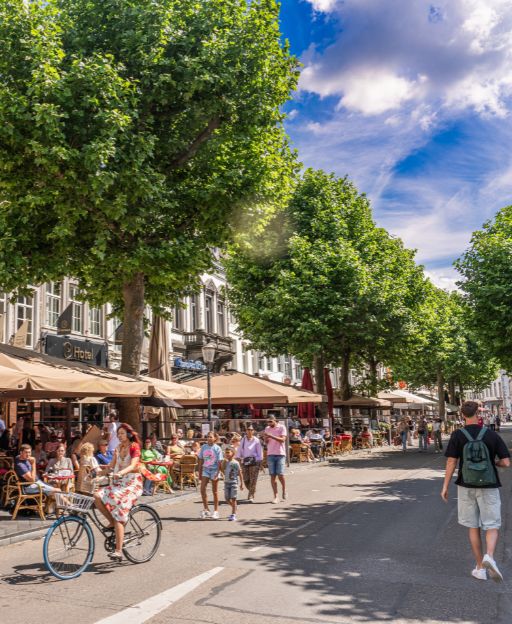
The real celebration opens on Sunday. By early morning, the Vrijthof — Maastricht’s grand central square, flanked by the Basilica of Saint Servatius and a row of terrace cafes — is already loud with colour and music.
Costumed locals spill from every doorway. The tradition is to dress as a character, not just random fancy dress. Family groups often match: ten people in the same giant bee costume, from grandmother to toddler. The effort is serious. The result is glorious.
The Optocht — the main parade — winds through the streets on Sunday afternoon. Giant floats move slowly through the crowd. Marching bands play in the Limburg style, loud and rhythmic. Thousands of costumed participants follow behind. It is one of the largest street events in the entire country.
Every cafe has its own Carnaval song. Bands play live for hours without stopping. The choruses ring out in dialect — and if you don’t know the words, the stranger beside you will teach you. This is that kind of party.
The Prince Burns His Crown on Tuesday Night
The Prins Carnaval is one of the most coveted roles in Maastricht’s civic life. Local businesses and clubs compete for years to earn the honour of putting forward a candidate.
Each Prince gets a theme song, a coat of arms, and a three-day reign of pure joy. On Tuesday afternoon — the final day — a ceremony closes the festival. The Prince burns his crown. It signals the return to ordinary life.
By midnight on Tuesday, Maastricht is quiet. Locals genuinely weep when it ends. You will understand why if you are there.
How to Experience Vastelaovend Without Getting It Wrong
Maastricht rewards preparation. These are the things that matter most.
- Book accommodation months ahead. Hotels and guesthouses sell out completely. Do not leave this late.
- Wear a costume. Arriving without one marks you immediately as an outsider. Any costume is fine — the more elaborate, the better.
- Learn one song. Any Carnaval anthem will do. Locals respond warmly to the effort.
- Eat the food. Look for vlaai (Limburg fruit tart), zoervleis (sweet-sour beef stew), and rijstevlaai (rice-filled pastry).
- Leave the Vrijthof occasionally. The side streets and small brown cafes hold the most authentic atmosphere.
If you want to explore the city before or after the festival, our guide to a day in Maastricht covers the historic streets, Roman ruins, and cafe culture that make this city worth visiting year-round. You can also find our Netherlands starting point at the Start Here page.
Frequently Asked Questions
When does Maastricht Carnaval take place each year?
Vastelaovend runs for three days — Sunday to Tuesday — before Ash Wednesday. The exact dates shift each year depending on Easter, but the festival always falls in February or early March. Check the dates well in advance and book accommodation as soon as they are confirmed.
Do you need tickets for Maastricht Carnaval?
No tickets are required for the street celebrations, the parade, or the Vrijthof gatherings. They are entirely free and open to everyone. Some cafes and private events charge entry, but the outdoor festival itself costs nothing.
What should visitors wear to Vastelaovend?
Wear a full character costume — the more committed, the better. Locals dress with real effort, and many families coordinate matching outfits across multiple generations. Going without any costume is fine, but you will stand out as a tourist. It’s worth making the effort to join in.
Is Maastricht Carnaval suitable for families with children?
Yes — Vastelaovend is a family celebration at its heart. Young children attend the parade and the street events throughout the day. The atmosphere is festive and inclusive. Sunday afternoon is the best time for families with small children before the evening crowd grows.
By Wednesday morning, the costumes are packed away. The Vrijthof is being swept clean. The Carnaval songs have faded. And somewhere in Maastricht, someone is already counting down the days to 11 November.
Love Netherlands — Free Every Week
Canal towns, hidden villages, Dutch stories. A free letter about the Netherlands — written slowly, delivered weekly.
Love more? Join 64,000 Ireland lovers → · Join 43,000 Scotland lovers → · Join 30,000 Italy lovers →
Free forever · One email per week · Unsubscribe anytime
Tours & experiences you might love


Powered by Viator. Some links are affiliate links — we may earn a small commission at no extra cost to you.