
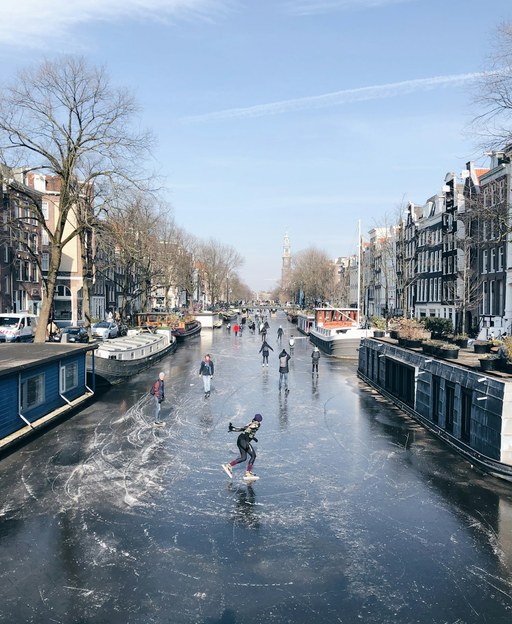
Ice skating in the Netherlands comes in two forms: natural ice on frozen canals and lakes, and year-round skating at indoor rinks. Natural ice is rare and cannot be planned. Indoor rinks give you a guaranteed session, and a few of them rank among the best speed-skating venues in the world. This guide shows you where to skate, when to try your luck, and how to make a winter trip work either way.
Love the Netherlands? Join our free newsletter for the best of the Netherlands → inlovewithnetherlands.com/subscribe
Where to Go Ice Skating in the Netherlands
Pick your venue by the season and the weather. These are the main options:
- Frozen canals and lakes. Friesland, the lakes of the Utrecht and Holland peat district, and the wetlands of Overijssel draw skaters when the ice holds.
- Heerenveen. The Thialf arena is the home of Dutch speed skating. Check public sessions on the official Thialf website.
- Utrecht. De Vechtsebanen offers skating and rink hire. See its official site for sessions.
- Amsterdam and The Hague. Both cities run speed-skating tracks and pop-up winter rinks. Opening times change every year, so confirm them with the venue before you go.
Natural Ice: When Do the Dutch Canals Freeze?
Dutch winters are mild and wet, so a hard freeze is the exception. Some winters bring no skateable natural ice at all. When a proper cold snap arrives, the country changes overnight. Offices empty, schools find reasons to close early, and families dig long-blade skates out of the shed.
The Dutch call it ijskoorts, or ice fever. Skaters head for the nearest lake or canal, and local ice clubs test the surface and mark the safe areas. You can follow the same rule as the locals: skate only where a club has opened the ice, and heed every sign and flag.
You cannot book a trip around natural ice. Plan a winter visit that works without it, and treat a freeze as a bonus. Our month-by-month guide to the Netherlands helps you choose the weeks with the best odds of cold weather.
The Elfstedentocht: The Famous Frozen Race
The Elfstedentocht is a 200-kilometre skating tour past the eleven historic cities of Friesland: Leeuwarden, Sneek, IJlst, Sloten, Stavoren, Hindeloopen, Workum, Bolsward, Harlingen, Franeker and Dokkum. The ice has to be at least 15 centimetres thick along the whole route, which is why the race happens so rarely.
Organisers have held the tour 15 times since 1909. The most recent edition took place on 4 January 1997. In the legendary 1963 race, only 69 skaters finished. Read the full story in our article on the ice race the Netherlands still talks about, and follow official news on the Elfstedentocht website.
You can still visit the route in any season. Leeuwarden makes the best base, and our Leeuwarden visitor guide covers the city. For the wider region, start with our Friesland travel guide.
Indoor Rinks and Speed-Skating Tracks
An indoor 400-metre track gives you real Dutch skating whatever the weather. Many Dutch children learn here, and the public sessions welcome beginners and experts side by side. Rinks hire out skates, so you do not need to pack your own.
Thialf in Heerenveen suits visitors who want to feel the sport’s history. International speed-skating events take place there, and you can often watch top athletes train. Utrecht and Amsterdam work better when you want skating as one stop on a city break.
Always check session times in advance. Training blocks and competitions can close a track to the public.
Dutch Skating Gear and Etiquette
Two styles of skate dominate on Dutch ice:
- Noren. These long, flat blades glide far with each stride. Most people use them on natural ice and on the speed-skating tracks.
- Hockey or figure skates. They suit small rinks and beginners who want to turn and stop with confidence.
Racing skaters also use clap skates, whose blade hinges at the toe. The Dutch pioneered them in the mid-1990s, and speed skaters worldwide now wear them.
On a busy track, keep to the rules locals follow. Skate in the same direction as everyone else, stay right when you slow down, and give faster skaters space to pass. Wear gloves and a hat, and consider a helmet if you are new to the sport.
What to Eat and Drink on the Ice
A skating day in the Netherlands runs on hot food. On natural ice, pop-up stalls called koek-en-zopie sell hot chocolate, spiced cake and mulled drinks. Many families carry a flask of their own.
The classic meal after a long skate is snert, a thick pea soup. Our article on why the Dutch only make pea soup when it is cold enough to skate explains the tradition and the recipe.
See Dutch Skating in Art
You can enjoy Dutch ice culture even in a mild winter. Hendrick Avercamp (1585–1634) specialised in crowded frozen landscapes full of skaters, sledges and tiny dramas. The Rijksmuseum in Amsterdam holds his work. Check the Rijksmuseum website to see what is on display before you visit.
Staying Safe on Natural Ice
Natural ice looks solid long before it is safe. Follow these habits whenever you skate outdoors:
- Skate only on ice that a local club or the municipality has checked and opened.
- Avoid ice near bridges, reeds, boats and moving water. It stays thinner there.
- Bring a friend rather than skating alone, and tell someone your plan.
- Carry ice picks on a cord round your neck, as many Dutch skaters do.
- Leave the ice at once if you hear cracking or see water on the surface.
Visitors often trust the crowds, but a crowd proves nothing about the ice. Look for official markings and ask locals at the nearest café or club hut.
Skating With Children
Indoor rinks suit families best. Staff hand out skates in children’s sizes, and many venues offer skating aids for first-timers. Dutch children often start on a plastic sled-style chair or a small skating frame, then move on to noren as they gain confidence. Book morning sessions when you can, because rinks fill up in the afternoons and at weekends.
Plan Your Winter Trip Around the Ice
Build a trip that wins whatever the thermometer says. Base yourself in Amsterdam or Utrecht, book one indoor session, and keep a day free in case a freeze arrives. Add a museum, a canal-side lunch and an evening at a Christmas market. Friesland rewards a longer stay, and the official Friesland tourism site lists regional events.
The Royal Dutch Skating Association, KNSB, publishes news on skating events in the country.
Frequently Asked Questions
Can you ice skate on the canals in Amsterdam?
Yes, but only in winters with a hard freeze, and those are rare. Skate only where the city or an ice club has opened the ice, and use an indoor rink in the meantime.
When is the best time for ice skating in the Netherlands?
Indoor rinks open through the cold months, with December to February the busiest period. Natural ice needs several days of hard frost, so no date is ever certain.
Where can beginners learn to skate in the Netherlands?
Indoor rinks such as De Vechtsebanen in Utrecht offer public sessions and skate hire. Check session times on the venue’s website before you travel.
How often does the Elfstedentocht take place?
Only when the ice reaches at least 15 centimetres along the whole 200-kilometre route. It has run 15 times since 1909, most recently in 1997.
You Might Also Enjoy
- Why an Ice Race Nobody Has Seen in 29 Years Still Captivates the Netherlands
- Why the Dutch Only Make Pea Soup When It’s Cold Enough to Skate
- Things to Do in Leeuwarden, Netherlands
Plan Your Netherlands Trip
Ready to turn ideas into an itinerary? Visit our Start Here page for guides to every region, season and city.
Join Netherlands Lovers
Every week, discover the Netherlands beyond the tourist trail — small villages, local recipes, cycling routes, and travel insights you won’t find in any guidebook.
Subscribe free — enter your email:
Free forever · One email per week · Unsubscribe anytime
Tours & experiences you might love


Powered by Viator. Some links are affiliate links — we may earn a small commission at no extra cost to you.