

Sinterklaas in the Netherlands is the country’s biggest children’s celebration, and it peaks on the evening of 5 December, three weeks before Christmas. A bearded bishop arrives by steamboat in November, children leave shoes by the door, and families swap gifts, poems and sugary spiced biscuits. This guide explains how the tradition works, what to eat, and how a visitor can join in.
Love the Netherlands? Join our free newsletter for hidden Dutch gems → inlovewithnetherlands.com/subscribe
Sinterklaas in the Netherlands: What Is the Tradition?
Sinterklaas is the Dutch name for Saint Nicholas, a 4th-century bishop of Myra in what is now Turkey. His feast day falls on 6 December, but the Dutch celebrate the night before. That evening, called pakjesavond (“parcels evening”), is the real centrepiece of the season.
The story goes that Sinterklaas lives in Spain and sails to the Netherlands each year with his white horse, Amerigo, and a crew of helpers known as the Pieten. He wears a red bishop’s robe and mitre and carries a staff. He keeps a big book that records whether each child has behaved. Children sing songs such as “Zie ginds komt de stoomboot” (“See, the steamboat is coming”) to welcome him.
For most Dutch families, Sinterklaas matters more than Christmas Day. Christmas on 25 and 26 December is quieter and more religious, with church services and long meals, while Sinterklaas is loud, silly and full of sweets.
How the Dutch Celebrate Sinterklaas
The November arrival
The season opens when Sinterklaas arrives in the country, an event the Dutch call the intocht. A different town hosts the national arrival each year, and television broadcasts it live. Many other towns and villages stage their own smaller arrivals on the following weekends, often with a boat, a brass band and a parade through the centre.
From then until 5 December, a daily children’s news programme follows the saint’s progress. Shop windows fill with red and gold decorations, and children start putting out their shoes.
Shoes, carrots and small gifts
On many evenings before 5 December, children place a shoe by the fireplace or front door. They tuck a carrot or some hay inside for Amerigo and sing a Sinterklaas song. By morning, a small gift or sweet has replaced the carrot. Many families do this every night until the big evening.
Pakjesavond: the gift evening
On the night of 5 December, families gather at home. A loud knock or a bag of treats on the doorstep tells the children that Sinterklaas has called. Adults and older children also draw names, then buy each other gifts. The giver wraps the present in a handmade disguise called a surprise and writes a short, teasing poem to go with it. Reading the poems aloud is half the fun.
The Sinterklaas Treats to Try
The food is the easiest way for a visitor to join in. Supermarkets and bakeries stock these sweets for weeks beforehand, and you can buy them in any Dutch town.
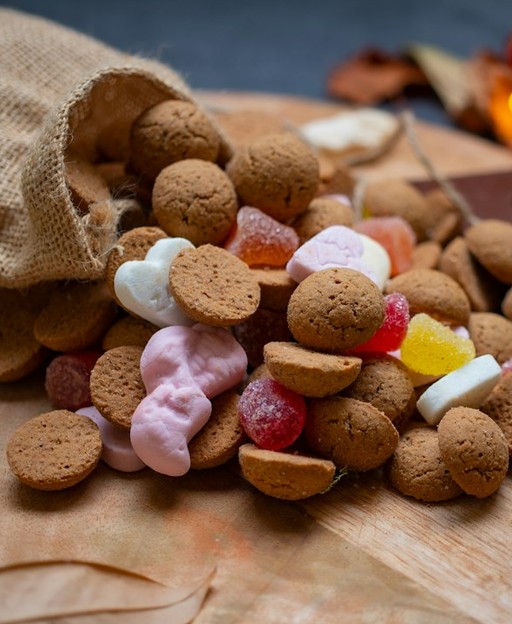
- Pepernoten: small, soft, round biscuits flavoured with aniseed and warm spices. Dutch families throw handfuls across the room.
- Kruidnoten: crunchy, spiced mini-biscuits. People often mix up the two names, but kruidnoten are crisper and darker.
- Taaitaai: a chewy ginger-flavoured biscuit, often baked in the shape of the saint.
- Chocolate letters: a slab of chocolate shaped like the first letter of your name. Bakeries and shops sell every letter of the alphabet.
- Banketstaaf: a pastry log filled with sweet almond paste.
- Speculaas: thin, spiced windmill biscuits that taste of cinnamon, nutmeg and cloves.
A tasting trip needs no special booking. A bag of pepernoten and a small chocolate letter make an easy souvenir, and bakeries often sell fresh banketstaaf by the slice. If you travel with children, ask staff which sweets contain nuts, because many Sinterklaas treats use almond paste or hazelnuts. Local bakers are usually happy to explain the differences between each biscuit and suggest their own favourite.
If you enjoy Dutch baking, our guide to the stroopwafel and the wider Dutch food guide cover the other sweet classics worth tasting on the same trip.
From Sinterklaas to Santa Claus
Many historians trace Santa Claus back to Sinterklaas. Dutch settlers brought the saint to New Amsterdam in the 17th century, and English speakers later turned “Sinterklaas” into “Santa Claus”. The red robe, the long white beard and the sack of gifts all survive in both traditions. Visitors from the United States often enjoy seeing the older original.
Six Sinterklaas Words Worth Knowing
A few Dutch terms will help you follow the season on posters, packaging and the radio.
- Intocht: the arrival of Sinterklaas, usually by boat.
- Pakjesavond: the gift evening on 5 December.
- Strooigoed: “scatter goods”, the handfuls of pepernoten and sweets that helpers toss to the crowd.
- Surprise: a homemade disguise for a gift, often a papier-mâché creation that hides a small present.
- Gedicht: the short rhyming poem that comes with each present.
- Pieten: the saint’s helpers, who hand out sweets and sing along with the children.
Children also learn a long list of Sinterklaas songs at school, so you may hear them drifting from classrooms, shops and street parades throughout November.
How Visitors Can Join In
You do not need an invitation to enjoy the season. Here is how to make the most of it.
- Watch an arrival. Check the local tourist office or town website for the date and route of the nearest intocht. Arrive early, because the best spots near the harbour fill fast.
- Browse the shops. Dutch bakeries, chocolatiers and department stores put on Sinterklaas displays in November. Buy a chocolate letter for a friend back home.
- Taste the biscuits. Pick up a bag of pepernoten at any supermarket and try them with coffee.
- Add a market. Combine your trip with a visit to one of the festive fairs in our guide to Christmas markets in the Netherlands.
- Expect a quiet 5 December evening. Dutch families celebrate at home, so some places may close early. Book dinner ahead if you plan to eat out.
Cold weather arrives early, so pack a warm coat and waterproof shoes. Our month-by-month guide to the best time to visit the Netherlands explains what late autumn feels like, and the Start Here page links every planning guide in one place.
Plan Your Netherlands Trip
Ready to plan? Begin with our Start Here page, which gathers our city guides, itineraries and practical advice for first-time visitors.
Frequently Asked Questions
When do the Dutch celebrate Sinterklaas?
The Dutch celebrate Sinterklaas on the evening of 5 December, with the season starting when the saint arrives in mid-November. The exact arrival date changes each year, so check the local announcements before you travel.
What is the difference between pepernoten and kruidnoten?
Pepernoten are soft, chewy and aniseed-flavoured, while kruidnoten are crunchy and taste of speculaas spices. Shops sell both, and many people use the names loosely.
Is Sinterklaas the same as Christmas in the Netherlands?
No, Sinterklaas is a separate celebration with its own date, songs and gifts. Most Dutch families exchange presents on 5 December, then keep 25 and 26 December for quiet meals and church.
Can tourists watch a Sinterklaas arrival?
Yes, anyone can watch an arrival, and entry to the street parades is free. Towns publish their date and route a few weeks ahead, so ask the local tourist office.
Join Netherlands Lovers
Every week, discover the Netherlands beyond the tourist trail — hidden villages, local recipes, cycling routes, and travel insights you won’t find in any guidebook.
Subscribe free — enter your email:
Free forever · One email per week · Unsubscribe anytime
Tours & experiences you might love


Powered by Viator. Some links are affiliate links — we may earn a small commission at no extra cost to you.