
Three days in Amsterdam gives you enough time to walk the canal ring, stand in front of a Rembrandt, eat raw herring from a street stall, and still catch the golden light on the Jordaan at dusk. This itinerary covers the essential experiences while leaving room to follow your curiosity down a side canal or linger over a second coffee. It works for first-time visitors and works equally well if it’s your second visit and you want more structure than a map.
Love the Netherlands? Join our free newsletter for hidden Dutch gems → inlovewithnetherlands.com/subscribe
Day 1: The Canal Ring and the Jordaan
Start your first morning at the Jordaan — the neighbourhood of leaning gables, independent art galleries, and small brown cafés that locals actually use. Pick up a coffee and a fresh stroopwafel from the Saturday Noordermarkt (if your timing allows) or the quieter Tuesday market. Then walk south along the Prinsengracht canal towards the Anne Frank House.
Book your Anne Frank House ticket first. Tickets are sold only on the museum’s website and go on sale about six weeks ahead; book the day they open. Timed-entry slots sell out fast, and there is no walk-up queue. The experience takes around ninety minutes. It is sobering, carefully curated, and more affecting than most visitors expect. From there, cross the canal and walk fifteen minutes south to reach Dam Square, Amsterdam’s historic centre.
Dam Square anchors the city’s medieval street plan. The Royal Palace on the square’s western edge dates from 1655, and you can go inside to see the grand Citizens’ Hall and its floor maps showing Amsterdam’s place at the centre of the known world. To the east, the Nieuwe Kerk hosts changing exhibitions. The square itself is a natural meeting point, though it fills with tourists by midday — arrive early if you want the best photographs.
Spend your afternoon on foot through the canal ring. The Jordaan rewards slow walking. Head down Elandsgracht, cross into the Negen Straatjes (the Nine Streets), and browse the independent shops between the three main canals. This small grid of streets holds vintage clothing, Dutch ceramics, specialist bookshops, and some of the city’s best lunch spots. Try a broodje — an open sandwich of smoked salmon, cheese or rookvlees — from any corner deli.
In the evening, find a canal-side terrace on the Prinsengracht or the Brouwersgracht and watch the boats pass. The Brouwersgracht (Brewers’ Canal) is quieter and less photographed than the famous Herengracht — it is one of Amsterdam’s finest streets and often missed by first-time visitors.
Day 2: The Rijksmuseum, Van Gogh and De Pijp
Day two belongs to Amsterdam’s museum quarter and the neighbourhood immediately south of it. Allow a full morning at the Rijksmuseum. The building itself is extraordinary — a Neo-Gothic palace built in 1885, with two cycling underpasses that form part of the daily commute for thousands of Amsterdammers. Inside, the Gallery of Honour holds Rembrandt’s Night Watch, Vermeer’s The Milkmaid, and Jan Steen’s chaotic household scenes. Buy your ticket online the day before; the queue for walk-in tickets on a summer morning can take forty minutes.
After the Rijksmuseum, cross Museumplein to the Van Gogh Museum. The permanent collection follows Vincent’s development from the dark palette of his early Dutch period through to the vivid yellows and blues of Arles and Saint-Rémy. The progression across the upper floor is among the most emotionally coherent gallery experiences in Europe. Again, book your timed-entry slot in advance.
For lunch, walk south from Museumplein into De Pijp, Amsterdam’s most lively neighbourhood. The Albert Cuyp Market runs six days a week along Albert Cuypstraat — it is the largest street market in the Netherlands, with a mix of fresh produce, Dutch cheese, fabric, clothing and street food. Try a poffertjes (miniature pancakes with icing sugar) or a bag of fresh-cut stroopwafels. The surrounding streets hold independent restaurants from Indonesian warungs to Surinamese roti shops, reflecting Amsterdam’s extraordinarily diverse food culture.
Spend the late afternoon in the neighbourhood cafés and boutiques before heading north to the Leidseplein in the early evening. The square and the streets around it concentrate Amsterdam’s theatre and nightlife: the Stadsschouwburg theatre, the famous Paradiso music venue (housed in a former church on the Weteringschans), and a ring of brown cafés where you can end the evening Dutch-style with a small glass of jenever gin.
Day 3: Canals by Boat and Amsterdam East
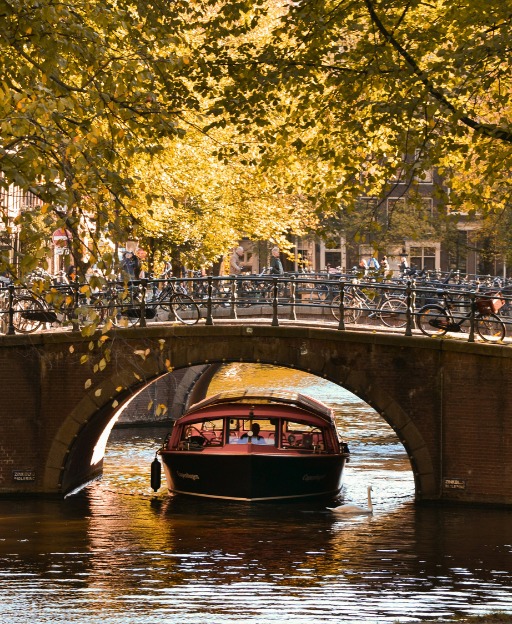
Save your third morning for an open boat canal tour. The ninety-minute tours departing from the Rondvaart Rederij operators near Centraal Station cover the main canal ring and give you a completely different perspective on the gabled facades and narrow bridges you have been walking past. Many operators now offer smaller craft — some self-skippered — which allow you to explore quieter waterways at your own pace. The canal system covers more than one hundred kilometres in the greater Amsterdam area; even a short trip reveals how much of the city’s life still plays out on the water.
From the waterfront, walk east along the IJ towards Amsterdam East (Oost). The neighbourhood runs from Artis zoo — one of the oldest in Europe, with a striking 1838 entrance — through to the Indische Buurt, a neighbourhood shaped by Amsterdam’s colonial history in Indonesia. The area around the Dappermarkt is the most multicultural stretch of the city: the market itself runs six mornings a week and sells everything from Moroccan spices to West African fabrics to Dutch stroopwafels.
The NEMO Science Museum on the waterfront (the boat-shaped green building visible from Centraal Station) is worth a look even if you don’t go inside — the roof terrace offers one of the best free views over Amsterdam’s old harbour and the ring of canals. Entry to the roof is free from the outside staircase on the south side.
For your final evening, head to Foodhallen in the Oud-West district — a covered food market inside a converted tram depot on the Bellamyplein. Around twenty food stalls circle a central bar, serving everything from Japanese yakitori to Dutch bitterballen to Argentinian empanadas. It is an entirely unstuffy place to eat well on your last night.
Day Trip Options from Amsterdam
If you want to extend beyond the city, Amsterdam’s position at the centre of the Netherlands rail network makes day trips genuinely easy. Haarlem is just fifteen minutes by direct train — a smaller, quieter Golden Age city with the Frans Hals Museum and a beautiful medieval square at its heart. Zaanse Schans lies twenty minutes north by regional train: the windmill village on the Zaan river is touristy but genuinely picturesque, especially in the early morning before the coach parties arrive.
For Keukenhof and the tulip fields (open mid-March to mid-May), take a bus from Schiphol or Leiden. The flower fields along the N208 road between Lisse and Hillegom are dramatic even from a bicycle window — which points to another option entirely. The Netherlands is the world’s most cycle-friendly country, and cycling out of Amsterdam on the dedicated fietspad network into the polder landscape north or east of the city is one of the best decisions you can make on a fine day.
Getting Around Amsterdam
The compact inner city is best covered on foot. Most of the major sights sit within a thirty-minute walk of Dam Square. Trams run frequently on the main routes (lines 1, 2, 5 and 17 cover the most useful tourist corridors) and the GVB day ticket gives unlimited access to all public transport within the city. Cycling is easy if you are comfortable in traffic — hire from one of the major rental companies near Centraal Station. Avoid bringing a car into the centre: parking is expensive, much of the historic core is car-restricted, and a bicycle genuinely moves faster.
When to Go
Spring (April and May) brings the tulip season and Keukenhof. Summer (June to August) sees the most visitors and the best outdoor terrace weather. Autumn (September and October) offers golden light on the canals and far smaller crowds — many experienced travellers consider it the best time to visit. Winter is cold but the Christmas market at the Museumplein and the city’s café culture make it cosy. For a full breakdown, see our month-by-month Netherlands travel guide.
What to Eat in Amsterdam
A three-day stay gives you enough meals to cover the essentials of the Amsterdam food scene. Raw herring (haring) with raw onion and pickle, eaten at a street stall, is the most traditional Dutch food experience in the city. Bitterballen — deep-fried beef ragout balls served with mustard — appear on nearly every café menu as a beer snack. Stroopwafels fresh from a market stall (still warm, with the syrup liquid rather than set) are entirely different from the packaged version. Indonesian cuisine is embedded in Amsterdam’s food culture: rijsttafel (rice table) — a colonial-era format of many small Indonesian dishes — remains a classic Amsterdam dinner choice.
Frequently Asked Questions
How many days do you need in Amsterdam to see the main sights?
Three days covers the canal ring, the Jordaan, the Rijksmuseum, Van Gogh Museum, Anne Frank House, and several neighbourhoods comfortably. You will not feel rushed, and you will have time for at least one day trip to Haarlem or Zaanse Schans.
Is the Anne Frank House worth visiting, and do you need to book in advance?
Yes and absolutely yes. The Anne Frank House is one of the most important memorial sites in Europe and the experience is unlike any conventional museum. Tickets are sold only on the museum’s website, annefrank.org, and go on sale about six weeks ahead; book the day they open.
What is the best way to get around Amsterdam as a first-time visitor?
Walking covers most of the historic centre easily, as the main sights are tightly clustered. For longer distances, trams are reliable and inexpensive with a day ticket. Renting a bicycle works well if you are comfortable cycling in light urban traffic alongside locals who ride fast and purposefully.
Is Amsterdam expensive for tourists?
Amsterdam is mid-to-high cost by European standards. Museum entry runs €20–€25 per adult for the Rijksmuseum and Van Gogh Museum. Café meals are reasonable (€12–€18 for lunch), while dinner at a sit-down restaurant typically costs €30–€50 per person. Budget accommodation starts around €35–€60 per night in a hostel; hotels average €150–€250. The Albert Cuyp Market, canal walks, and the NEMO roof terrace are free.
Free 3-Day Amsterdam Planner
Our day-by-day PDF for first-time visitors, with the official page for every place. Free when you join our newsletter.
You Might Also Enjoy
- The Jordaan, Amsterdam: The Complete Neighbourhood Guide
- Rijksmuseum Amsterdam: Complete Visitor’s Guide (2026)
- Amsterdam Food Guide: What to Eat, Where to Eat, and Dutch Dishes You’ll Love
Plan Your Netherlands Trip
Ready to explore beyond Amsterdam? Our Start Here guide covers everything you need to plan a Netherlands trip — from regional highlights to practical travel tips and city-by-city itinerary ideas.
Join Netherlands Lovers
Every week, discover the Netherlands beyond the tourist trail — hidden villages, local recipes, cycling routes, and travel insights you won’t find in any guidebook.
Subscribe free — enter your email:
Love more? Join 64,000 Ireland lovers → · Join 43,000 Scotland lovers → · Join 30,000 Italy lovers →
Free forever · One email per week · Unsubscribe anytime
Tours & experiences you might love


Powered by Viator. Some links are affiliate links — we may earn a small commission at no extra cost to you.