
Most people picture sunflowers. Swirling skies. Blinding yellows and electric blues. But Van Gogh did not find his colour in France. He found his soul in the Netherlands — in dark peat fields, smoky cottages, and a flat landscape that most people drive straight through.
The Netherlands shaped Vincent van Gogh more than anywhere else on earth. And you can still stand in the exact places he painted.
A Brabant Boy Who Became a Painter Late
Van Gogh was born on 30 March 1853 in Zundert, a small market town in North Brabant near the Belgian border. His father was a Dutch Reformed minister. His childhood was unremarkable — he tried selling art, then teaching, then preaching. He did not start painting seriously until he was 27.
He was already an intense, deeply feeling person. The Netherlands gave him his first subjects: working people, humble interiors, flat horizons under heavy skies. His early palette was almost entirely dark. Ochre, umber, coal black, raw sienna.
Today, Zundert holds a small but moving Van Gogh experience. The house where he was born no longer stands, but the town square holds a striking bronze double statue — Vincent and his brother Theo, side by side. Every September, Zundert hosts a flower parade in his honour, with dahlia floats recreating his most famous paintings.
The Hague and the Lessons He Taught Himself
In 1882, Van Gogh moved to The Hague. He worked briefly with his cousin Anton Mauve, a respected realist painter who gave him early instruction. The Hague years were crucial.
He sketched labourers, seamstresses, and fishermen on the Scheveningen seafront. He drew the poor with fierce compassion. He believed art should show real life — not prettify it.
The Kunstmuseum Den Haag (formerly the Gemeentemuseum) holds the world's largest Mondrian collection, but it also contains significant Van Gogh drawings from this period. Two Dutch masters, one city.
Enjoying this? Get stories like this every week from Love Netherlands — Subscribe free →
Nuenen: Where His Greatest Dutch Work Was Made
The most important stop on any Van Gogh trail is Nuenen, a quiet village in North Brabant. Van Gogh lived here from late 1883 to late 1885 — the longest he stayed anywhere in his Dutch years.
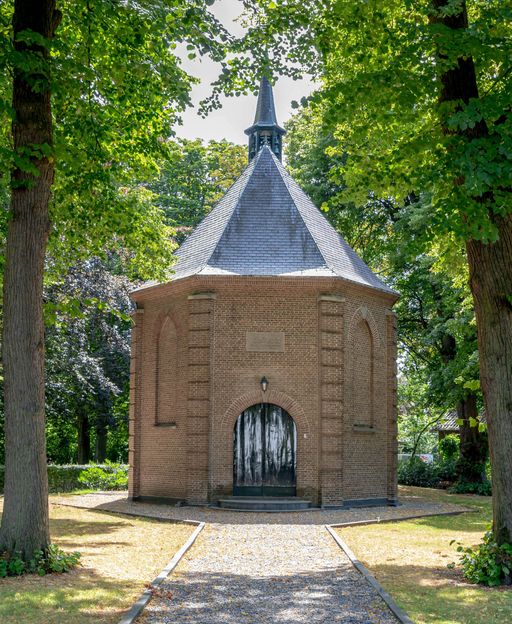
He painted over 200 works in Nuenen. Most were modest subjects: weavers at their looms, peasants digging, the old church tower surrounded by autumn trees. That tower still stands. It is called the Van Gogh Kerkje, and it looks almost exactly as it did in his paintings. Stand in front of it and you can see precisely what he saw.
In May 1885, Van Gogh completed The Potato Eaters here. Five peasants sit around a lamp-lit table, sharing a meal. Their hands are rough, their faces gaunt. It is not a beautiful painting by conventional standards. It was never meant to be. It is honest — and that honesty makes it extraordinary.
The Nuenen Visitor Centre (open daily except Mondays) runs a permanent Van Gogh experience, including a recreation of the weavers' cottage interior. A 12-kilometre cycling route connects all his key painting locations in the village. If you are planning a slow, curious journey through the Netherlands, our Start Here guide is the best place to begin.
The Dark Palette That Made the Bright Colours Possible
People sometimes ask why Van Gogh's Dutch work looks so different from his later canvases. The answer is simple: he painted what he saw.
The Netherlands in the 1880s was industrial, grey, and struggling. The rural poor worked long hours for very little. Van Gogh painted them without sentiment. He believed that showing suffering honestly was more respectful than softening it.
When he moved to Paris in 1886, he met the Impressionists — Monet, Renoir, Gauguin, Seurat. His palette changed almost overnight. But the discipline and the empathy came from the Netherlands. His Dutch years were not a prelude to greatness. They were the foundation of it.
If you love Dutch art and want to understand how light and place shaped the country's greatest painters, this piece on Vermeer and Delft connects the same thread across two centuries.
The Van Gogh Museum in Amsterdam
Amsterdam holds the world's largest Van Gogh collection. The Van Gogh Museum on Museumplein opened in 1973. It holds around 200 paintings and 500 drawings — assembled over decades by Vincent's nephew, who shared his name and refused to let the work be forgotten.
The museum is chronological. You move through the Dutch years first — dark, earthbound, powerful. Then Paris. Then Arles. The transition room, where the palette shifts from brown to gold, is one of the most striking experiences in European art.
The museum sits on Museumplein, shared with the Rijksmuseum and the Stedelijk Museum. The Jordaan neighbourhood — one of Amsterdam's most walkable and rewarding areas — is a 15-minute walk away.
Frequently Asked Questions
Where can I visit Van Gogh's birthplace in the Netherlands?
Van Gogh was born in Zundert, North Brabant. The original house no longer stands, but the town has a small museum and the famous bronze double statue of Vincent and Theo. Every September, Zundert hosts a flower parade using thousands of dahlias to recreate his most famous paintings.
What is the best Van Gogh trail to follow in the Netherlands?
The Nuenen cycling route is the most rewarding. It covers 12 kilometres and connects the locations Van Gogh painted most often, including the Van Gogh Kerkje chapel and the weaver's cottage site. The Nuenen Visitor Centre has maps, audio guides, and a permanent exhibition.
Do I need to book Van Gogh Museum tickets in advance?
Yes, always book in advance. The Van Gogh Museum is one of Europe's most visited museums and timed-entry tickets sell out weeks ahead, especially in spring and summer. Same-day tickets are rarely available at the door.
What is The Potato Eaters and where was it painted?
The Potato Eaters (1885) is Van Gogh's most important Dutch painting. It shows five peasants sharing a meal by lamplight in a dark cottage. Van Gogh painted it in Nuenen, and it now hangs in the Van Gogh Museum in Amsterdam. He considered it his first serious masterpiece.
The Netherlands gave Van Gogh his discipline, his empathy, and his conviction that ordinary life was worth painting. Every sunflower, every starry night, every blossoming almond tree — all of it was rooted in flat Brabant fields and smoky village interiors.
Come and see where it began.
Love Netherlands — Free Every Week
Canal towns, hidden villages, Dutch stories. A free letter about the Netherlands — written slowly, delivered weekly.
Love more? Join 64,000 Ireland lovers → · Join 43,000 Scotland lovers → · Join 30,000 Italy lovers →
Free forever · One email per week · Unsubscribe anytime
Tours & experiences you might love


Powered by Viator. Some links are affiliate links — we may earn a small commission at no extra cost to you.