Jun 22, 2026
|
Groningen’s Surnames Tell Stories
Uncover the fascinating origins of Dutch names, from ancient Frisian roots to global diaspora tales.
|
|
Love Netherlands
|
|
Dear Netherlands,
There are two kinds of mornings in the Dutch spring. The kind where you cycle to the market and come home with warm cheese and rye bread and a handful of wild tulips. And the kind where it rains sideways for an hour, then the sun comes out and everything looks like a Vermeer. Today, if you’re lucky, is one of those mornings.
|
|
Was this forwarded to you? Subscribe free and never miss an edition →
|
|
If the daily newsletter brings you closer to the Netherlands, our Sunday Premium Edition takes you deeper into it. Every Sunday you’ll receive travel deep dives, curated itineraries, regional stories, and hidden gems you won’t find anywhere else.
Upgrade for less than the price of a pint and see the Netherlands in a completely new way.
|
Photo via Love Netherlands
|
In today’s email:
- Dutch Surnames of Groningen: Origins and Meanings
- At The Café — Café De Doffer — Amsterdam’s All-Day Neighbourhood Bar
- Around The Web — Dutch Surnames of Zeeland: Origins and Meanings, Maastricht Day Trip from Amsterdam: The Complete Guide, Dutch Surnames of Limburg: Origins and Meanings + more
- From Love Netherlands — Best Beaches in the Netherlands: A Complete Guide for Visitors
- Dutch Food You Will Love — Oliebollen — The Dutch Doughnut of New Year’s Eve
|
Dutch Surnames of Groningen: Origins and Meanings
👉 Read the full story
If your family name ends in -ma , -sma , or -ema , there is a good chance your roots trace to Groningen. This northern Dutch province has given the world some of its most distinctive Dutch surnames . Groningen names reflect its flat, open landscape, its Frisian past, and its centuries as a Hanseatic trading centre. This guide explores the origins and meanings of the most common Dutch surnames from Groningen — and where these families ended up across the world. Why Groningen Surnames Are Distinctive Groningen sits at the northeastern corner of the Netherlands. It borders Germany to the east and the Wadden Sea to the north. For centuries, Groningen city was a major grain-trading hub and a member of the Hanseatic League. These facts shaped its surnames. You will find names built on words for land, water, farming, and trade. You will also find names with Frisian roots and Old Saxon suffixes…
👉 Read the full story
Have you been there? Do you have a memory of this corner of the Netherlands? Hit reply and tell us — we’d love to hear your story.
|
|
“Want deep dives into the Netherlands every Sunday? Our Premium readers already have their next edition waiting.”
|
At The Café
Café De Doffer — Amsterdam’s All-Day Neighbourhood Bar
Café De Doffer on the Runstraat in the Nine Streets has been a daily-life café since 1900. It’s open from morning coffee through to late-night last-call, and you’ll see the same faces drift through every part of the day — students in the morning, freelancers at lunch, locals after work, regulars after midnight. The kitchen does a small menu of well-cooked Dutch comfort food, the wine list is short and good, and the back room has a pool table that has been there since the seventies. It’s the closest thing the Nine Streets has to a living room.
👉 Visit the café
|
Around The Web
|
From Love Netherlands
The best beaches in the Netherlands stretch for more than 280 kilometres along the North Sea coast, offering golden sand, vast dunes, and bracing sea air within easy reach of Amsterdam, The Hague, and Rotterdam. If you imagine the Netherlands as a country of canals and cycling, the coastline tends to come as a welcome surprise — and in summer, the Dutch make the most of every sunny day they get. Love the Netherlands? Join our free newsletter for…
👉 Read the full story
|
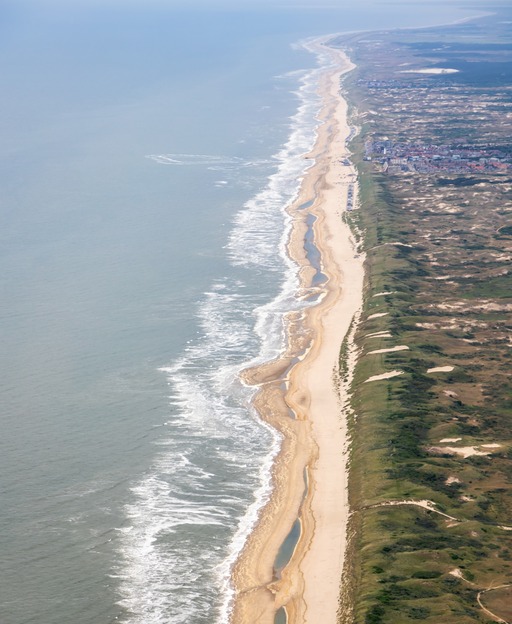
Photo via Love Netherlands
|
Dutch Food You Will Love
Oliebollen — The Dutch Doughnut of New Year’s Eve
Oliebollen are round Dutch doughnuts, usually with raisins or currants tucked inside, deep-fried until the outside is crisp and the inside is light and yeasty, then dredged in icing sugar. Every Dutch town has at least one oliebollenkraam — a temporary stall — that appears in late December and disappears on 1 January. They’re the food of New Year’s Eve. The annual AD newspaper test of the country’s best stalls is a national event in itself, and Dutch families will drive an hour to buy a bag of warm oliebollen from whichever vendor wins.
👉 Read the full story
|
|
Know Someone Who Loves the Netherlands?
If you’re enjoying this letter, the best thing you could do is forward it to one friend who’d love the Netherlands too. This newsletter grows by word of mouth alone — every single subscriber came from someone sending it to someone else. Thank you for being one of the first.
|
|
Our daily newsletter is free and always will be. But for less than the price of a pint, you can upgrade to our Sunday Premium Edition, which gives you access to our travel deep dives, curated itineraries, and regional stories. Consider buying us a stroopwafel — it’s the Dutch way to say thank you.
|
Also From Our Family
Love Ireland too? Over 64,000 readers wake up each morning to the Love Ireland newsletter — loveireland.substack.com
Or Scotland? Join 43,000 Scotland lovers — lovescotland.substack.com
|
|
You’re reading Love Netherlands — a free letter about canal towns, hidden villages, and Dutch stories, delivered Monday to Friday.
inlovewithnetherlands.com ·
Unsubscribe
© 2026 Love Netherlands · Part of the Love To Visit LLC family
|