

If your surname ends in “van” or “de”, your family tree very likely leads to the Netherlands. This 5-day Dutch heritage itinerary is built for diaspora visitors making their first trip back. It takes you from Amsterdam’s Golden Age canals to the wide skies of Friesland. Along the way, you will visit national archives, ancestral churches, and windmill-dotted villages that look much as they did 300 years ago.
Whether your family left for South Africa in the 1830s, sailed to New York in the 1600s, or served the VOC in Indonesia, the Netherlands holds the records. This guide helps you find them — and feel them too.
Day 1: Amsterdam — The City Your Ancestors Knew
Amsterdam was the engine of the Dutch Golden Age. Between 1602 and 1800, the Dutch East India Company (VOC) sent more than a million people across the globe. Many set off from here.
Start at the Amsterdam City Archives (Stadsarchief Amsterdam) on Vijzelstraat. It holds baptism records, marriage registers, and notarial documents going back to the 1500s. Entry is free. Staff can help you search — bring a family surname and any dates you know.
After the archives, walk to the Westerkerk on the Prinsengracht. This is one of the oldest Protestant churches in Amsterdam. Many Dutch families were baptised and married here. Stand inside and imagine your ancestor in one of its pews.
In the afternoon, visit the Rijksmuseum. The Golden Age paintings show you what the Netherlands looked like when your family lived here. Rembrandt’s Night Watch was painted in 1642 — the same era many Dutch-American ancestors made their crossing.
Where to stay: The Jordaan neighbourhood. It was a working-class district in the 1600s. Many ordinary Dutch families lived here — the people who became the diaspora.
Getting around: Buy an OV-chipkaart at Amsterdam Centraal. You will use it for every train on this trip. Travelling the Netherlands by train is simple, fast, and affordable.
Day 2: The Hague — Where the National Records Live
Take an early train from Amsterdam to Den Haag Centraal. The journey takes about 50 minutes.
The Hague holds the most important genealogy resource in the Netherlands: the National Archives (Nationaal Archief). It holds records for all Dutch provinces from 1811 onwards. Before 1811, the Netherlands kept records in church registers — many of which are digitised on WieWasWie.nl and accessible before your trip.
Book a research slot in advance at nationaalarchief.nl. Bring a laptop. You can search on-screen and request original documents for in-person viewing.
VOC records: If your family has Cape Dutch or Dutch-Indonesian heritage, ask specifically for VOC employment records. The VOC kept detailed records of every sailor, soldier, and merchant. You may find your ancestor’s name, birthplace, and age in a 300-year-old ledger.
In the afternoon, walk to the Binnenhof — the medieval parliament building. From here, Dutch governors once sent edicts to Cape Town, Batavia, and New Amsterdam. The Mauritshuis museum next door holds Vermeer’s Girl with a Pearl Earring and is worth 45 minutes of your time.
For dinner, try one of The Hague’s Indonesian restaurants. The city has the largest Indonesian community in the Netherlands. It is a direct legacy of the VOC era that shaped millions of Dutch-Indonesian families.
Day 3: Delft and South Holland’s Villages
Delft is 15 minutes by train from The Hague. It is one of the most important heritage towns in the Netherlands.
Start at the Gemeentearchief Delft (municipal archive). Delft’s records are well-preserved. If your family came from South Holland, this is where you may find the oldest traces. The archive staff are used to helping overseas visitors.
Then visit the Oude Kerk (Old Church). This Gothic church dates to 1246. The floor tiles cover the graves of thousands of ordinary Dutch families. Vermeer is buried here. Admirals and merchants too. But so are people with the same surnames now spread across South Africa and the Americas.
After Delft, hire a bicycle or take a local bus into the South Holland countryside. The flat polder landscape looks almost exactly as it did in the 1600s. The towns of Schiedam and Vlaardingen were major departure points for emigrants heading to the Cape Colony and New Amsterdam.
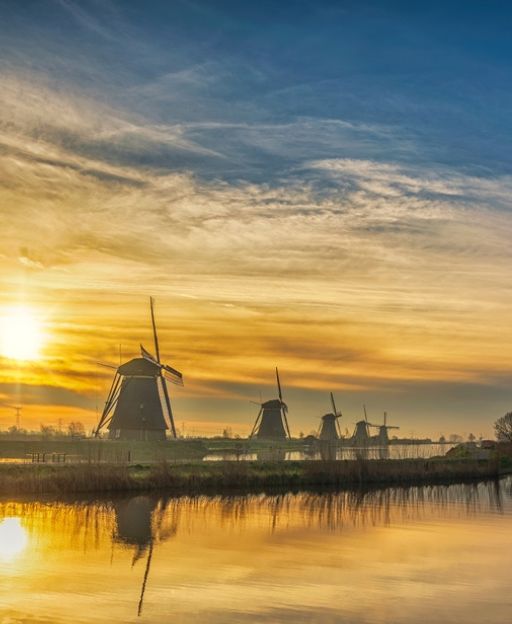
In the late afternoon, make time for Kinderdijk — the UNESCO-listed cluster of 19 windmills built in the 1740s. These mills were working long before your ancestors left. Many emigrants would have passed them on their way to Rotterdam’s harbour. Standing among them at golden hour is unforgettable.
If you want to understand more about the surnames common in this region, read our guide to Dutch surnames from South Holland before you visit.
🇳🇱 Enjoying this? Netherlands lovers get stories like this every week. Subscribe free →
Day 4: Friesland — The Province of Frisian Surnames
Take an early train from Rotterdam (or The Hague) to Leeuwarden. The journey takes about two hours with a connection in Amsterdam.
Friesland is unlike anywhere else in the Netherlands. It has its own language — Frisian — still spoken by 400,000 people today. Frisian surnames are distinct from Dutch ones. If your family name ends in “stra”, “ma”, or “sma”, Frisian roots are very likely.
Start at Tresoar in Leeuwarden — the combined archive and library for Friesland. It holds all Frisian civil records, church registers, and family trees. Staff are knowledgeable and welcome foreign researchers. Many Frisian emigrants went to South Africa and North America in the 1800s, and their descendants now visit regularly.
After the archive, walk the historic centre of Leeuwarden. The Oldehove — a leaning medieval tower — has stood here for 500 years. Your ancestors would have known it. The city has a quiet, dignified character that feels very different from Amsterdam.
In the afternoon, hire a bicycle and explore the surrounding villages. The hamlet of Jorwerd is about 15 kilometres from Leeuwarden. It is small and quiet and looks almost unchanged from the 1800s. Frisian farmhouses, narrow lanes, and ancient graveyards fill the landscape.
Read our full guide to Dutch surnames from Friesland for context on your family name. The Friesland travel guide covers everything you need for your time here.
Evening: Stay in Leeuwarden overnight. Book ahead — accommodation is limited compared to Amsterdam.
Day 5: Haarlem and Heading Home
Return to Amsterdam by train (about two hours from Leeuwarden). Stop in Haarlem on the way.
Haarlem sits just 15 minutes west of Amsterdam. It was one of the most important cities in the Dutch Golden Age. Its printing industry helped spread knowledge across Europe. Many Mennonite and Reformed families — who later became major emigrant communities — lived here in the 1600s and 1700s.
Visit the Noord-Hollands Archief in Haarlem. It holds records for North Holland province, including smaller towns and villages around Amsterdam. If your search on Day 1 left gaps, this archive may fill them.
Walk to the Grote Kerk van Sint-Bavo — a cathedral so large it dominates the whole skyline. It took 150 years to build. Painter Frans Hals is buried here. A young Mozart played its famous organ in 1765. Stand inside for a few minutes and simply breathe.
Finish your heritage itinerary with coffee on the Grote Markt. Watch the city around you. People have been going about their daily lives here for centuries. Your family was once part of this. In some small way, you still are.
For your last evening, return to Amsterdam and walk the Jordaan one more time. The canals look much as they did in 1650. That is the gift of the Netherlands — it keeps its past visible.
Before You Go: Essential Heritage Research Resources
- WieWasWie.nl — free access to digitised Dutch civil records from 1811 onwards
- Delpher.nl — digitised Dutch newspapers and documents from 1618 to 1995
- FamilySearch.org — large Netherlands collection with indexed records
- CBG Centrum voor Familiegeschiedenis in The Hague — specialist genealogy library open to visitors
- Nationaal Archief — national records, VOC archives, and pre-1811 church registers
Read our full guide to tracing your Dutch ancestry before you travel. For detailed advice on visiting archives and finding ancestral towns, see our guide to planning a Dutch heritage trip.
Practical Tips for Your Dutch Heritage Itinerary
Best time to visit: April to September. Archives are open year-round. Summer days are long and the countryside is at its best.
Getting around: The Netherlands has one of the best train networks in Europe. An OV-chipkaart works on all trains, trams, and buses. Cycling is ideal in Friesland and South Holland.
Language: Dutch. Almost all Dutch people speak excellent English. Archive staff are very helpful with overseas visitors and used to genealogy questions.
Budget: National and municipal archives are free. Museum entrance costs around £12–£20. Budget £65–£100 per day for accommodation, food, and transport.
What to bring: A notebook, a list of known surnames and approximate dates, and a laptop or tablet for archive searches. Some archives ask you to book ahead online.
Frequently Asked Questions
How long does a Dutch heritage trip take?
Five days gives you enough time for Amsterdam, The Hague, Delft, and Friesland. If you have a specific ancestral town to find, plan for a full week. More time means fewer rushed archive sessions.
Do Dutch archives help foreign visitors?
Yes. Most Dutch archives have English-speaking staff. The National Archives in The Hague and Tresoar in Leeuwarden both welcome international genealogy researchers regularly.
What records will I find in Dutch archives?
Civil records from 1811 include births, marriages, and deaths. Church records go back further — sometimes to the 1500s. VOC archives include employment records for colonial servants across Asia and Africa, with names, birthplaces, and ages.
What if I cannot find my ancestral town?
Start with the surname. Our guide to tracing Dutch ancestry shows how to narrow down a province from a family name. Municipal archives can then help identify the specific village.
Is it worth hiring a Dutch genealogist?
For complex searches — especially pre-1811 records or VOC connections — a local genealogist can save days of work. The CBG in The Hague can recommend accredited researchers. Costs vary but typically start at £50 per hour.
You Might Also Enjoy
- How to Trace Your Dutch Ancestry: A Step-by-Step Guide
- How to Plan a Dutch Heritage Trip to Your Ancestral Town
- Dutch Surnames of Friesland: Origins and Meanings
Join Netherlands Lovers
Every week, discover the Netherlands beyond the tourist trail — hidden villages, local recipes, cycling routes, and travel insights you won’t find in any guidebook.
Subscribe free — enter your email:
Already subscribed? Explore our archives for more hidden Dutch gems.
Love more? Join 64,000 Ireland lovers → · Join 43,000 Scotland lovers → · Join 30,000 Italy lovers →
Free forever · One email per week · Unsubscribe anytime
Plan Your Netherlands Trip
Ready to start planning? Visit our Start Here page for everything you need — from when to visit to how to get around, and the best places to stay across the Netherlands.
Tours & experiences you might love


Powered by Viator. Some links are affiliate links — we may earn a small commission at no extra cost to you.