

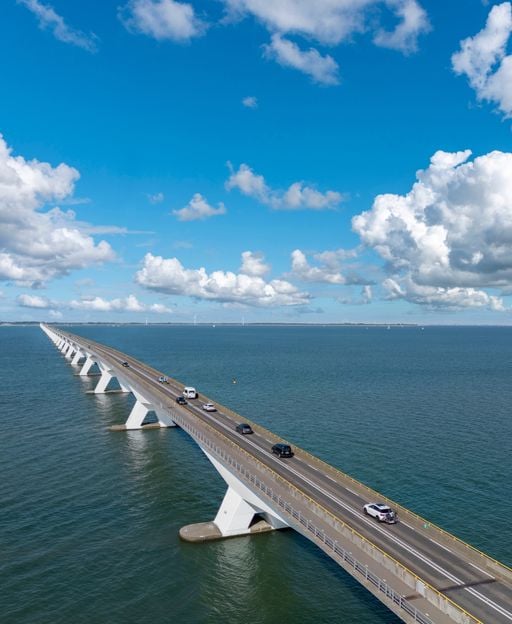
Most people drive through Zeeland without stopping. They see flat water, wide skies, and a bridge that seems to go on forever. What they miss is one of the most remarkable human stories in Europe.
The Province That Is Almost Not There
Zeeland means “sea land.” The name is not poetry — it is a geographical fact.
More than half of Zeeland sits below sea level. Dykes, sluices, and storm barriers are the only things standing between the province and the North Sea. Without constant maintenance, the water would return within years.
But the Dutch did not build here despite the sea. They built here because of it.
The Night the Sea Won
On the first of February 1953, a storm surge struck the Dutch coast with almost no warning.
The dykes gave way. In a single night, 1,836 people drowned. Entire villages disappeared. Livestock, furniture, and lives floated out to sea before dawn broke.
It was the worst natural disaster in Dutch recorded history. The rest of the Netherlands watched and mourned. Zeeland dug out, rebuilt, and quietly vowed it would never happen again.
The Delta Works: The Dutch Answer
The government’s response became the Delta Works — a vast network of dams, sluices, and storm barriers that sealed off the estuaries running through Zeeland.
Engineers spent thirty years completing a system that now protects ten million people. The Maeslant Barrier, finished in 1997, weighs more than two Eiffel Towers combined. Sensors close it automatically whenever storm surges threaten.
The Delta Works earned a place on the list of the Seven Wonders of the Modern World. Most visitors to the Netherlands never see it.
Enjoying this? Get stories like this every week from Love Netherlands — Subscribe free →
A Life Shaped by Tides
Zeelanders are not like other Dutch people. They will tell you this themselves.
Three centuries of isolation — connected to the mainland only by ferry until the 1960s — shaped a distinct culture. The dialect sounds different. The food differs from the rest of the country. The pace of life moves at its own rhythm.
The fishing towns still smell of salt and diesel. Mussel beds in the Oosterschelde estuary produce some of the finest shellfish in Europe. Between August and April, restaurants fill with moules-frites and fresh oysters from the same waters that once drowned thousands.
There is something quietly defiant about eating here.
What Zeeland Looks Like Now
Zeeland today is a province of vast, open distances.
The Zeeland Bridge stretches almost six kilometres across the Oosterschelde — the longest bridge in the Netherlands. Drive it on a clear morning and the water turns gold on both sides. The scale of it takes you by surprise every time.
The beaches at Domburg and Cadzand draw summer crowds, but the real Zeeland reveals itself off-season. The delta islands — Walcheren, Schouwen-Duiveland, Noord-Beveland, Zuid-Beveland, Tholen — each carry their own distinct character. Our guide to exploring the Netherlands can help you plan which to visit first.
Villages here look unchanged from the 1950s. Church towers stand in the same positions they occupied before the flood. Only the dykes are higher now.
What the Sea Teaches You
Visitors come to Zeeland expecting a quiet coastal escape.
Most leave with something harder to explain. The sea here is not decoration. It does not sit quietly in the background — it is an active, present force that shaped every dyke, every window, and every family name in this province.
To understand the Dutch relationship with water more deeply, read about the Dutch tradition of walking the seabed at low tide. That habit makes complete sense once you have stood in Zeeland.
Standing on a Zeeland dyke and watching the grey water push at the stones below, you understand something the rest of the Netherlands has perhaps grown too comfortable to remember: this land was a fight. And it still is.
What is the best time to visit Zeeland?
Late spring (May to June) and early autumn (September to October) offer comfortable weather and far fewer crowds. Avoid mid-July and August if you want the beaches and dyke paths to yourself.
What is Zeeland famous for in the Netherlands?
Zeeland is famous for its mussels and oysters, the Delta Works storm barrier system, and its wide, uncrowded beaches. The province also suffered the worst losses in the catastrophic North Sea flood of 1953.
How do I get to Zeeland from Amsterdam?
A direct train from Amsterdam Centraal to Goes takes around 1 hour 45 minutes. Driving gives more flexibility across the delta islands, and most are connected by bridge or causeway.
Is Zeeland worth visiting for just one day?
Yes. Drive the Zeeland Bridge, walk around Middelburg’s historic centre, and stop for a bowl of Zeeland mussels at a harbour-front restaurant. The Delta Expo museum at Neeltje Jans deserves at least two hours on its own.
Love Netherlands — Free Every Week
Canal towns, hidden villages, Dutch stories. A free letter about the Netherlands — written slowly, delivered weekly.
Love more? Join 65,000 Ireland lovers → · Join 43,000 Scotland lovers → · Join 30,000 Italy lovers →
Free forever · One email per week · Unsubscribe anytime
Tours & experiences you might love


Powered by Viator. Some links are affiliate links — we may earn a small commission at no extra cost to you.