

At low tide, the North Sea pulls back from the Dutch coast. What it leaves behind is not sand. It is dark, living mud — acres of it, stretching for kilometres toward the Wadden Islands on the horizon.
And the Dutch walk into it. Deliberately. With joy.
The Walk Into the Sea
Wadlopen means mudflat walking. “Wad” is the Dutch word for tidal flat. “Lopen” means to walk.
Every summer, thousands of Dutch people cross the Wadden Sea on foot. They start from the Friesland or Groningen coast and walk across the exposed seabed to one of the islands — Ameland, Schiermonnikoog, or Terschelling.
The walk takes four to six hours. Parts of it are knee-deep in water channels. All of it is wet, muddy, and completely unforgettable.
A UNESCO World Heritage Site Beneath Your Feet
The Wadden Sea is the world’s largest unbroken tidal flat system. UNESCO awarded it World Heritage status in 2009, recognising it as one of the most important coastal ecosystems on the planet.
Over 10,000 species of animals live here. Migratory birds use it as a rest stop on routes stretching from Arctic Russia to West Africa. Seals rest on higher sandbanks at the edge of the channels.
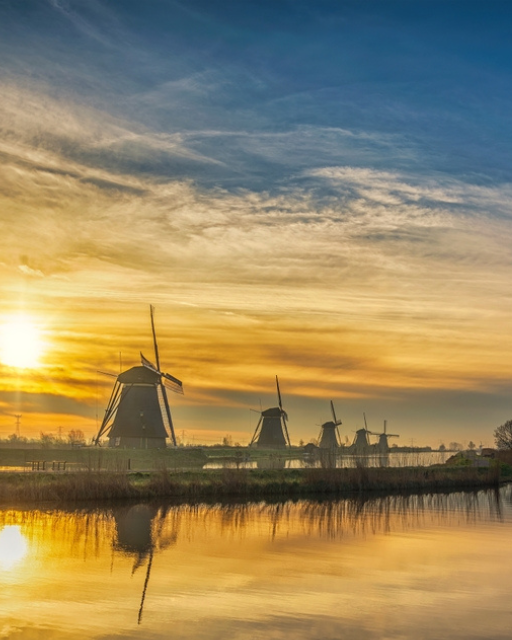
When you walk across it, you walk through all of that life. The Netherlands has always understood its relationship with water differently to other countries — you can see the same spirit in the 19 windmills at Kinderdijk, built to push back against the same forces that shape the Wadden Sea. But wadlopen is something more primal. You cross the sea on foot.
What to Expect on the Flats
No two wadlopen walks are the same. The mud shifts with every tide. The route varies.
But here is what you can count on.
Cold water. Channels cut across the route, and you wade through them. Some crossings reach waist height. Waterproof boots help, though many veterans simply go barefoot.
Deep mud. In places, the mud pulls at your boots with real force. It smells of salt and brine and something ancient.
Silence. Once you are an hour out on the flats, the mainland disappears. The islands look closer than they are. The only sounds are wind, birds, and the squelch of your own footsteps.
Wildlife. Oystercatchers, dunlins, lapwings. Eider ducks bobbing in channels. Grey seals watching from a distance, curious and unhurried.
You cannot do this alone. Tides on the Wadden Sea move fast — dangerously fast. All walks use licensed guides, and every guide carries GPS, ropes, and safety gear. No exceptions.
Enjoying this? Get stories like this every week from Love Netherlands — Subscribe free →
When to Go and How to Book
The wadlopen season runs from May to October. Autumn walks are quieter and more atmospheric. Summer walks are social and warm. May and June offer the longest days.
Most tours depart from Wierum or Pieterburen in Friesland, or from villages along the Groningen coast. The crossing to Ameland is one of the most popular routes — roughly 12 kilometres across open tidal flat.
Guides ask for reasonable fitness. Children must be at least twelve years old. You will get wet from the waist down — plan accordingly. Bring dry clothes for the ferry ride back.
Book through licensed operators only. Wadloopcentrum Friesland and Dijkstra’s Wadlooptochten in Groningen both have strong safety records and experienced guides.
If you’re new to the Netherlands and building your itinerary, the Start Here guide covers the essentials for planning your trip.
The Dutch and the Sea — A Deeper Story
The Dutch relationship with water runs through everything. Polders pumped dry over centuries. Dikes holding back the North Sea. Canals threading through every city.
Wadlopen is part of this same story. It is not a sport, not a race. It is something closer to a ritual — a reminder of who the Dutch are and where they came from.
Standing on the mudflat with the coast behind you and an island ahead, the idea of the Netherlands makes complete sense. A small country that has always walked straight into the sea.
What is the best time to go wadlopen in the Netherlands?
May to October is the full season. September and early October offer the quietest walks with fewer tourists. Summer (June–August) is busiest but social, with large groups and an energetic atmosphere.
Is wadlopen safe for beginners?
Yes — with a licensed guide. Never attempt it alone. Tides on the Wadden Sea are fast and channels shift with every crossing. Guided tours include full safety equipment and experienced route knowledge.
Where do wadlopen tours depart from in the Netherlands?
Most tours leave from Wierum or Pieterburen in Friesland, or from Groningen province. The crossing to Ameland is the most popular route, taking approximately 4–6 hours on foot across the tidal flats.
What should I wear for a wadlopen walk?
Wear clothes you don’t mind getting wet and muddy. Old trainers or waterproof boots work well, though many experienced walkers go barefoot on the mud. Always bring a dry change of clothes for the return ferry.
Love Netherlands — Free Every Week
Canal towns, hidden villages, Dutch stories. A free letter about the Netherlands — written slowly, delivered weekly.
Love more? Join 65,000 Ireland lovers → · Join 43,000 Scotland lovers → · Join 30,000 Italy lovers →
Free forever · One email per week · Unsubscribe anytime
You set off from a flat coastline in Friesland. A few hours later, you climb the dike of an island you walked to across the open sea.
That is not something you forget.
Tours & experiences you might love


Powered by Viator. Some links are affiliate links — we may earn a small commission at no extra cost to you.