

Image: Shutterstock
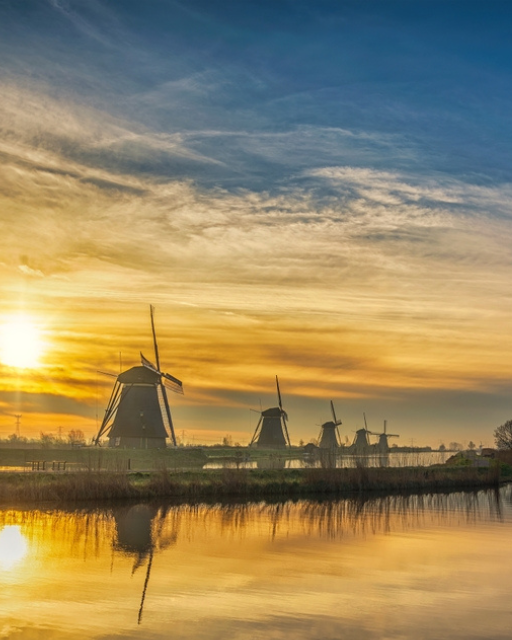
A row of 19 windmills stands in a line along a canal south-east of Rotterdam, and together they look like the most Dutch thing on earth. Most visitors come, take a photograph, and leave thinking “well, that was lovely.” Almost nobody asks the obvious question: why are there 19 of them in a line?
The answer is a story about Dutch engineering at its most stubborn, and it begins in the 18th century with a piece of land that kept trying to drown.
The problem
Kinderdijk sits at the confluence of two rivers, the Lek and the Noord. For centuries the area was constantly under threat of flooding, and it became one of the first places in the Netherlands where serious land drainage was attempted. Early dams and dikes weren’t enough. The land kept sinking; the water kept rising. By 1738 the situation was desperate.
So the local water board did something remarkable. They built a chain — an actual chain — of 19 windmills, arranged in two parallel lines, each one pumping water up from a lower level to a higher one, until finally the water reached a level high enough to drain away through the sluice gates into the river. It was a bucket brigade, except the buckets were 19 wind-powered pumping stations, each one the size of a small house.
Why they’re still there
Diesel pumps replaced the windmills for most of the 20th century. The mills were kept as a museum, a UNESCO World Heritage Site since 1997. But — and this is the part most tourist guides leave out — they still work. Every summer the windmill keepers run them for a few hours at a time, not just for visitors, but to keep the mechanisms in working order. In 1976 a severe storm knocked out the electric pumps, and Kinderdijk fell back on its windmills. The 18th-century bucket brigade still held the water back.
What to see
You can walk or cycle the full length of the canal in an afternoon. One of the windmills is open as a museum — you can climb the wooden ladder-stairs to the grinding floor and see how the family who lived inside it worked and slept around the massive gears. Come in the early morning if you can; the mist rises off the canal and the blades turn slowly against a pale blue sky, and you understand, in a way no photograph can show, exactly why the Dutch think of themselves as a people who made their own country out of the sea.
Tours & experiences you might love


Powered by Viator. Some links are affiliate links — we may earn a small commission at no extra cost to you.