

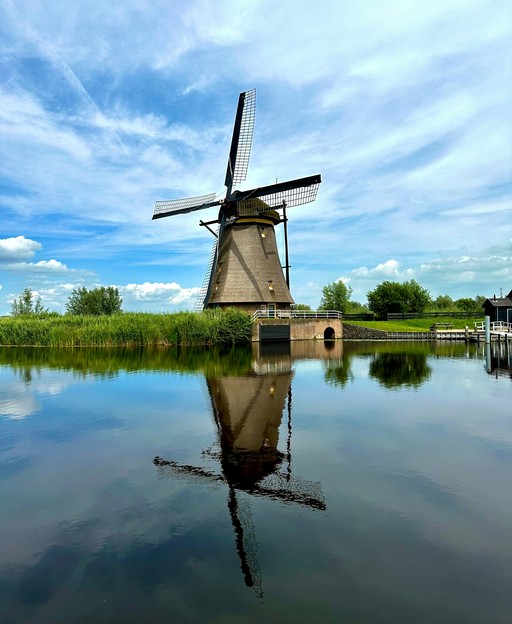
Kinderdijk, a World Heritage site in South Holland, is the best place in the Netherlands to see a working windmill landscape. Nineteen mills stand along its canals, and you can reach them from Amsterdam in roughly two hours by train and water taxi. This guide explains how to plan a Kinderdijk windmills day trip, what to do when you arrive, and when to go.
Love the Netherlands? Join our free newsletter for the best of the Netherlands → inlovewithnetherlands.com/subscribe
Why the Kinderdijk windmills matter
Most people picture Dutch windmills as picture-book scenery. At Kinderdijk they did real work. The land here lies below the level of the nearby rivers, so water collects in the fields and threatens to drown them. Millers used wind power to lift that water, step by step, into a system of reservoirs and then out into the river.
Most of the mills that survive today date from the 1730s and 1740s. UNESCO added the site to the World Heritage List in 1997 because it shows how the Dutch fought water for centuries. You can read the official listing on the UNESCO World Heritage Centre page for Kinderdijk-Elshout.
The name carries a story too. According to legend, a cat kept a floating cradle balanced during a great flood and carried a baby safely to a dike. “Kinderdijk” means “child’s dike”. Historians treat the tale as folklore, but locals still tell it with a smile.
How to get to Kinderdijk from Amsterdam
Kinderdijk lies near Rotterdam, so your journey has two parts. First, take a train from Amsterdam to Rotterdam. Then switch to a water taxi or a bus for the last stretch.
By train and water taxi
Trains to Rotterdam Centraal run frequently throughout the day. Check times and fares on the NS journey planner. From Rotterdam, the Waterbus water taxi sails along the river to the Kinderdijk landing stage. The ride is part of the fun, because you watch the harbour and the river traffic slide past.
Plan on about two hours each way, door to door. Build in extra time at the first connection, and confirm the sailing times on the day you travel. The 9292 journey planner shows both bus and water taxi options in one search. Our guide to train travel in the Netherlands explains how to pay with an OV-chipkaart or contactless card.
By guided tour or by car
Several operators run organised excursions from Amsterdam. These trips cost more, but they remove the planning. Drivers can park near the site, although parking rules and fees change, so check the official site before you set off. The Kinderdijk ticket information page lists current admission details and how to book.
What to do at Kinderdijk
You do not need a strict itinerary here. The site is flat, open and easy to explore at your own pace. Most visitors combine a few of the activities below.
Walk the canal paths. Two rows of mills run along the water, and a network of paths links them. A walk takes you past reed beds, grazing fields and mills with their sails turning slowly. Take your time. The best views often come from the quiet far end, where fewer people go.
Visit a mill that opens its doors. Some mills open as small museums. You can climb inside, see the machinery and learn how millers lived. Families still live in several of the mills, so respect any signs asking for privacy. The official site explains what is open, and the short visit page suggests ideas for a quick stop.
Take a boat trip. A boat trip shows you the mills from the water, which is how the millers saw them. The low angle makes the sails look enormous. Book ahead in busy months, and check the official site for current options.
Cycle between the mills. Cyclists love Kinderdijk because the ground is flat and the views change around every bend. Bring your own bike or hire one nearby. If you want to cycle more of the countryside, read our cycling in the Netherlands guide for route ideas and safety tips.
Photographers should bring a wide lens and a little patience. Wait for a cloud to drift away from the sun, and let the water settle before you frame the reflection. Many visitors also pack a picnic, since the grassy banks make a pleasant place to rest between walks. Whatever you choose, leave no litter behind and keep to the marked paths, because the fields around the mills are working farmland.
The best time to visit
Kinderdijk looks good in every season, but each one offers something different.
- Spring: Fresh green fields and long evenings make for easy walking. National Windmill Day, which usually falls in May, draws mills across the country into the celebration.
- Summer: Long days give you plenty of time, and the light on the water is lovely. It is also the busiest season, so arrive early.
- Autumn: Soft light and thinner crowds suit photographers.
- Winter: Mist or frost can turn the canals into a silver landscape. In hard winters, people skate on the frozen waterways. Our guide to ice skating in the Netherlands explains the tradition.
Arrive in the morning if you can. The light is gentle, the paths are quiet and you will have time for lunch in the area afterwards.
Tips for a smooth day trip
- Wear comfortable shoes. You will walk further than you expect on the flat paths.
- Pack a rain jacket. Dutch weather changes fast, even in summer.
- Book tickets for any activity that needs one before you travel.
- Bring a charged phone, but keep it in your pocket for a while and simply look.
- Respect the residents. People live and work in this landscape.
Pair it with another windmill site. If you love windmills, you can pair this trip with a second visit. Many travellers also see Zaanse Schans, a different kind of windmill village north of Amsterdam. Kinderdijk shows the working water-management side, and Zaanse Schans shows the industrial side. For a larger story about the Dutch fight against the sea, try our Delta Works day trip. Or stay in the area and explore Dordrecht and the Biesbosch.
Frequently asked questions about Kinderdijk
Is Kinderdijk worth visiting from Amsterdam?
Yes, if you want to see a real water-management landscape rather than a staged windmill village. The journey takes about two hours each way, so plan a full day.
How long should I spend at Kinderdijk?
Most visitors spend three to four hours. That gives you time to walk the paths, visit a mill and take a boat trip without rushing.
How many windmills are at Kinderdijk?
The site has nineteen windmills along its canals. Together they form one of the most complete traditional mill landscapes in the world.
Can I visit Kinderdijk without a car?
Yes. Take a train to Rotterdam, then use the water taxi or a bus to reach the site. The Dutch public transport network makes this simple for first-time visitors.
You Might Also Enjoy
Plan Your Netherlands Trip
Ready to build the rest of your journey? Our Start Here page gathers our best planning guides in one place, from cities and villages to food, history and travel tips.
Join Netherlands Lovers
Every week, discover the Netherlands beyond the tourist trail — small villages, local recipes, cycling routes, and travel insights you won’t find in any guidebook.
Subscribe free — enter your email:
Free forever · One email per week · Unsubscribe anytime
Tours & experiences you might love


Powered by Viator. Some links are affiliate links — we may earn a small commission at no extra cost to you.