
South Limburg Unfolded
Valkenburg’s caves, the Geuldal, vineyards, Rolduc Abbey and the Drielandenpunt: the Netherlands’ only hills, explored over four unhurried days.
An introduction to South Limburg
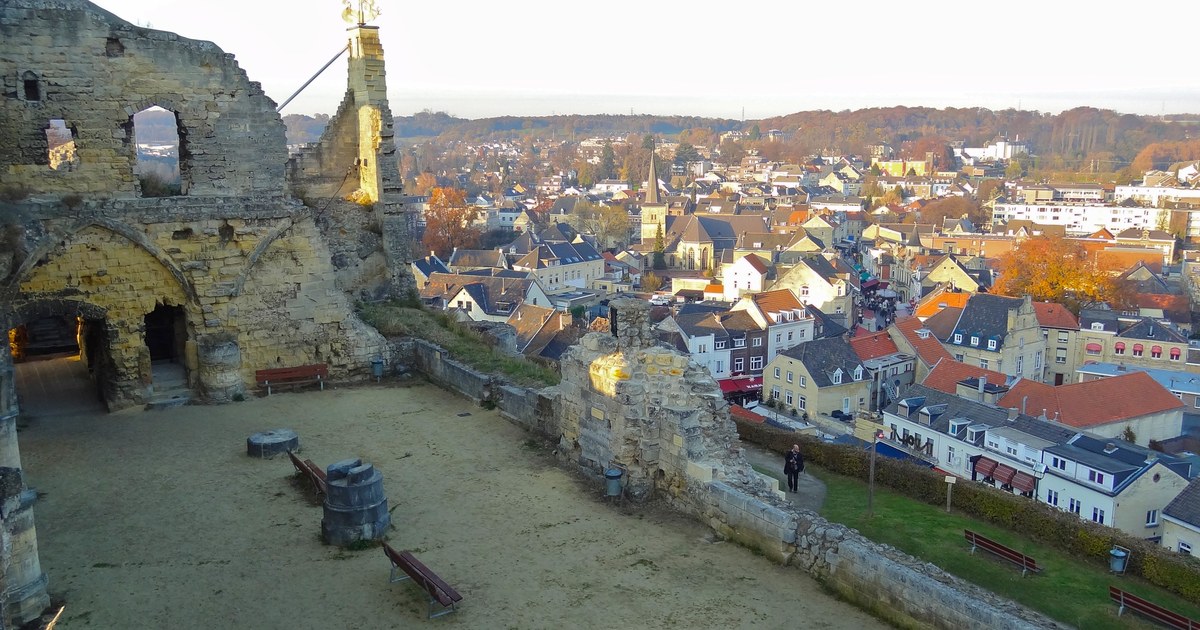
Most of the Netherlands sits at or below sea level, and the horizon is a ruler-straight line. Then you travel to the far south-east, to the long tongue of Limburg that pushes down between Belgium and Germany, and the land begins to roll. Orchards climb gentle slopes, lanes dip into wooded valleys, and half-timbered farms and pale limestone churches appear where you might expect polders. This is the Heuvelland, the “hill country”, and for a Dutch traveller it feels almost like stepping abroad without leaving home.
The hills are modest by any international standard. The highest point in the whole of the Netherlands on the European mainland, the Vaalserberg, rises to 322.7 metres, and that is the summit of the country. Yet the landscape here has real character. Rivers such as the Geul, the Gulp and the Maas have cut into soft limestone and loess over millions of years, and people have been shaping the results for far longer. Romans mined the stone, medieval lords built castles on the heights, and monks planted vines and founded abbeys. The legacy is a region of caves, ruins, cellars and cloisters, all within a short drive or cycle ride of one another.
It is also a place where borders feel pleasantly soft. Belgium and Germany are close on every side, and Aachen, Liège and Maastricht are all within easy reach. The local dialect, Limburgish, sounds quite unlike Hollandic Dutch, the food leans towards rich stews and fruit pastries, and the culture is warmly Catholic, with carnival (Vastelaovend) treated as a serious annual event. Expect hospitality, good bread and a slower pace than the Randstad.
In this guide we explore Valkenburg and its marl caves and castle ruin, wander the Geuldal, taste wine in a country better known for beer and cheese, step inside the abbey at Rolduc, and finish at the Drielandenpunt, where three countries meet. Bring comfortable shoes. You will need them, and you will be glad of them.
In this email
- Valkenburg: the marl caves, the castle ruin and a handsome old town
- The Geuldal: a gentle river valley of villages, mills and slow cycling
- The vineyards: Dutch wine, tasted where it is made
- Rolduc Abbey: a Romanesque landmark at Kerkrade
- The Drielandenpunt: Vaals, the Vaalserberg and the meeting of three countries
- Itinerary, stays and closing thoughts: four days, where to sleep and what to remember
Best time to visit: Late April to early June brings blossom and fresh green, while September and early October bring the grape harvest and golden light. Summer is lively but busy in Valkenburg. Winter has its own appeal, as the Valkenburg Christmas Market is held in the caves, and February brings carnival.
Travel logistics: Fly into Maastricht Aachen Airport, or reach Maastricht by train from Amsterdam or Utrecht in roughly two and a half hours, often with a change at Eindhoven or Utrecht. Trains run on to Valkenburg and Heerlen. A car is helpful for the vineyards and smaller villages, but buses and cycling cover much of the region. Electric bikes can be hired locally, which is wise given the gradients.
Continue reading with a Premium subscription
This is a Love Netherlands Sunday Premium guide. Premium subscribers receive the full article in their inbox every Sunday and unlock the full archive of past editions.
Become a Premium subscriber →Tours & experiences you might love


Powered by Viator. Some links are affiliate links — we may earn a small commission at no extra cost to you.