
On 27th April each year, millions of Dutch people drag fold-up tables onto their pavements and start selling their old junk to strangers. This is not a car boot sale. It is one of the Netherlands’ most beloved national traditions — Koningsdag, or King’s Day. And if you have never seen it, you are not quite ready for how strange and joyful it looks.
The King’s Birthday Belongs to Everyone
King’s Day marks the birthday of King Willem-Alexander, born on 27th April 1967. But it is nothing like a quiet flag day or formal ceremony. It is the largest annual street party in the world, and the Dutch take it very seriously.
The tradition has deeper roots than the current king. For decades, the Dutch celebrated Koninginnedag — Queen’s Day — on 30th April, honouring Queen Juliana and then Queen Beatrix. When King Willem-Alexander took the throne in 2013, the date moved to his birthday. The orange stayed.
One small detail: if 27th April falls on a Sunday, King’s Day moves to 26th April. The Dutch are practical people.
The Vrijmarkt — Where Anyone Can Sell Anything
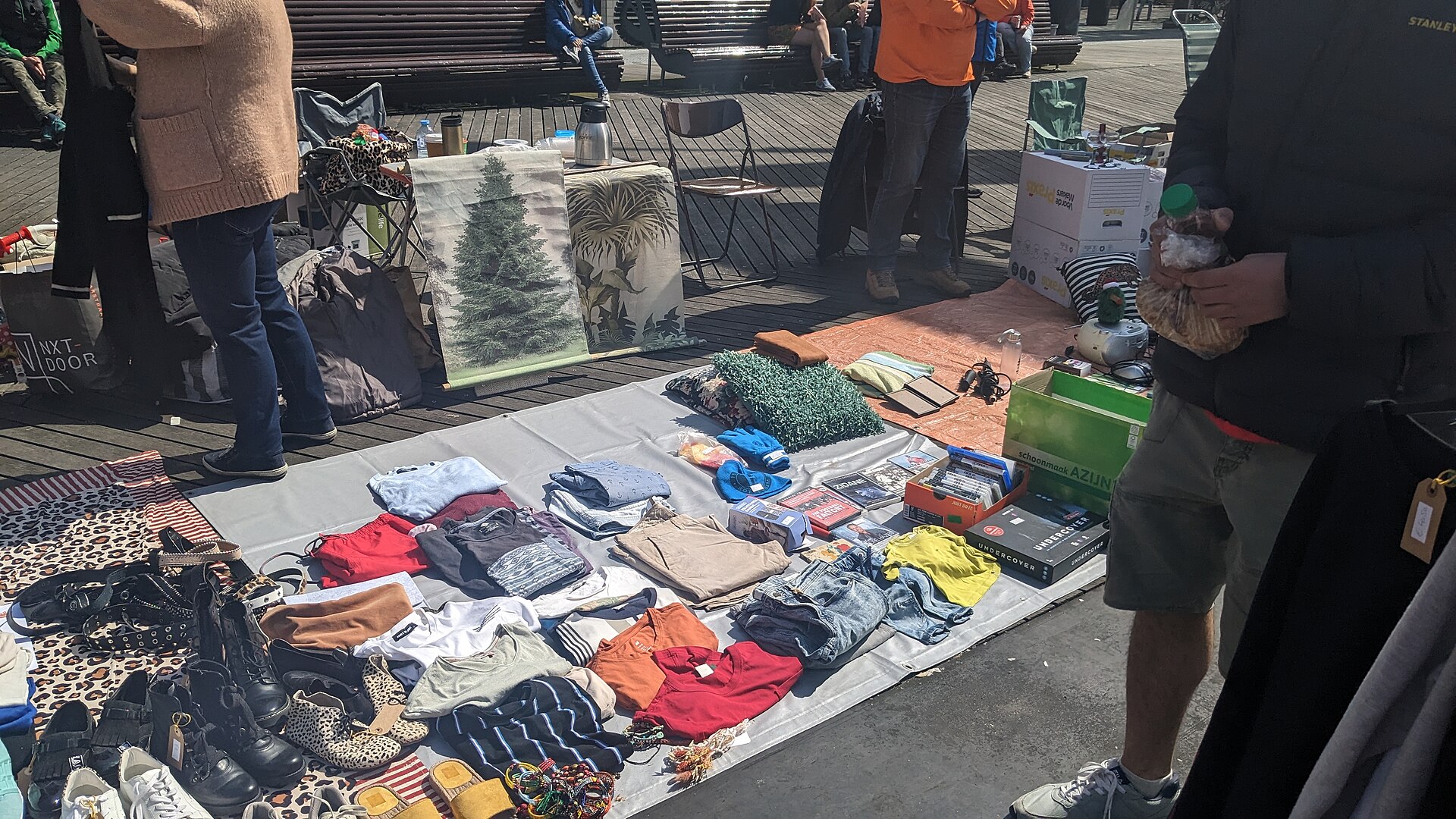
The heart of King’s Day is the vrijmarkt, or “free market.” For one day only, the Dutch government lifts all trading licences and permits. Any person, any age, can set up a stall anywhere in the country and sell whatever they want — no paperwork, no fees, no restrictions.
Children spend weeks sorting through old toys and books. Families haul out furniture, vinyl records, and kitchen items they have been meaning to clear for years. By 07:00 on King’s Day morning, every bridge, canal path, park bench, and stretch of pavement in Amsterdam has become a market stall.
Some sellers make careful handwritten signs. Others spread a blanket on the ground and sit beside it. The rule is simple: if you can carry it there, you can sell it. Most things go for one or two euros. Some things go for nothing at all.
Enjoying this? Get stories like this every week from Love Netherlands — Subscribe free →
Why Is Everything Orange?
The Dutch royal family carries the name the House of Orange — Huis van Oranje. The name dates to the 16th century, when William of Orange led the Dutch revolt against Spanish rule. He became the founding father of the Dutch nation, and orange became the national colour.
On King’s Day, that tradition becomes something close to a national uniform. Orange shirts. Orange hats. Orange wigs. Orange face paint. Some people plan their outfits for weeks in advance. Walking through a Dutch city on King’s Day feels like stepping into a painting where someone replaced every colour with one.
If you want to understand how the House of Orange shaped the country you see today, our guide to the Netherlands is a good place to start.
Amsterdam on the Water
In Amsterdam, the canals become a second city on King’s Day. Hundreds of boats — decorated with orange flags, bunting, and elaborate structures — float through the waterways. Some carry full sound systems and become floating dance floors. Others carry amateur bands playing songs the crowd half-recognises.
Getting from one neighbourhood to another takes twice the usual time. Not because of traffic, but because every bridge is three people deep. They stand watching the boats pass below, which is entertainment enough.
The canal houses that line Amsterdam’s waterways look particularly striking when their reflections mix with the orange noise below. The city built those houses to impress — and on King’s Day, they succeed without even trying. If you are curious about how the Dutch built those narrow, leaning homes, the story of Leiden’s canal city gives you a vivid sense of the era.
King’s Day Beyond Amsterdam
Amsterdam draws the biggest crowds, but every Dutch city and village holds its own version. The Hague hosts official royal appearances. Utrecht fills its canals with boats just as Amsterdam does. Smaller towns set up stages on their market squares, where school bands play and children sell lemonade from cardboard stands.
The vrijmarkt in smaller cities feels more personal. You buy something directly from the person who used it. In a country famous for its practicality, this feels very Dutch — nothing wasted, everything with a second life.
Vendors sell poffertjes (small fluffy pancakes) and fresh stroopwafels alongside the market stalls. The Dutch tradition of street food goes back centuries, and King’s Day gives it one of its biggest stages.
Frequently Asked Questions About King’s Day
When exactly is King’s Day in the Netherlands?
King’s Day falls on 27th April each year — the birthday of King Willem-Alexander. If the 27th falls on a Sunday, it moves to 26th April instead.
Where is the best place to celebrate King’s Day in the Netherlands?
Amsterdam offers the largest celebrations, with canal boat parties, street markets, and live music across every neighbourhood. For a calmer but still vibrant experience, cities like Utrecht, Delft, and Leiden hold their own lively vrijmarkt events without Amsterdam’s intensity.
What should tourists know before attending King’s Day?
Book accommodation months in advance — King’s Day is one of the busiest travel days of the year. Wear orange if you have it; you will feel out of place without it. Arrive early to find good vrijmarkt spots, and bring cash. Most sellers do not accept card payments. Public transport runs a reduced service, so plan your journeys carefully.
Is the King’s Day street market free to attend?
Completely free. The vrijmarkt requires no ticket, no registration, and no entry fee for visitors. Sellers set up spontaneously from early morning. You simply walk through and browse.
King’s Day is not really about the king at all. It is about a country giving itself permission — once a year — to be joyful in public. To sell, to dance, to dress in outrageous orange, and to spill out of buildings onto every available patch of ground.
For one day in late April, the Netherlands belongs to everyone.
Love Netherlands — Free Every Week
Canal towns, hidden villages, Dutch stories. A free letter about the Netherlands — written slowly, delivered weekly.
Love more? Join 64,000 Ireland lovers → · Join 43,000 Scotland lovers → · Join 30,000 Italy lovers →
Free forever · One email per week · Unsubscribe anytime
Tours & experiences you might love


Powered by Viator. Some links are affiliate links — we may earn a small commission at no extra cost to you.