

Delft: Where Vermeer Still Lives in the Light
Canal walks, cobbled squares, and the world’s most celebrated pottery — why the Netherlands’ quietest gem deserves your full and unhurried attention.
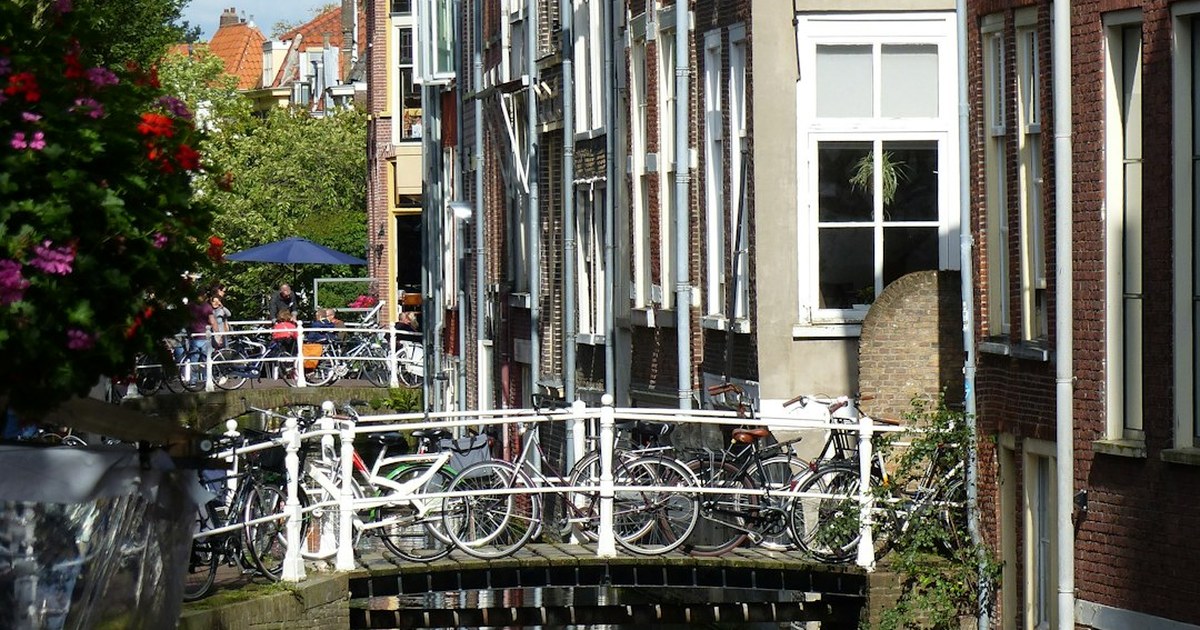
An introduction to Delft
There is a particular quality of light in Delft that painters have been chasing for centuries. It comes off the water sideways — cool and grey and then suddenly golden — falling across brick façades and filling the arches of bridges with something that feels almost theatrical. You notice it the moment you step out of the railway station: the canals are narrower here than in Amsterdam, the streets less crowded, the pace unhurried in a way that begins to feel deliberate after a few minutes’ walking. Delft has learned, perhaps, that some cities are best experienced slowly.
In the seventeenth century, this was one of the most consequential cities in the Dutch Republic. It had a flourishing ceramics industry producing the blue-and-white pottery that still bears its name, a brewing trade, a thriving cloth market, and — for a few extraordinary decades in the middle of the century — a painter of striking genius working in an inn on the market square. Johannes Vermeer lived his entire life in Delft. He was baptised here, married here, died here, and was buried in the Oude Kerk not far from the house where he had made, in the careful light of an upstairs room, thirty-six or thirty-seven paintings that changed the way the world understood what a painting could be.
The city’s story stretches back much further than Vermeer. The Prinsenhof, a former convent on the northern edge of the old town, was where William of Orange — father of the Dutch nation — made his headquarters, and where, in 1584, he was shot on the stairs by a hired assassin. The bullet holes are still there, marked in the plaster of the staircase wall. The Nieuwe Kerk, whose tower rises above the market square, holds his marble mausoleum, and the Dutch Royal Family has been buried in the crypt below ever since. Delft is, in every sense, the city where the Netherlands began.
What makes it such a pleasure to visit today is that it has not surrendered to being only a museum. The Technische Universiteit Delft — founded in 1842 and now one of Europe’s leading technical universities — fills the streets with students and a quiet intellectual energy. There is a Thursday market on the Markt, a lively café culture on the Beestenmarkt, and a sense throughout that this is a city people actually live in. The history is simply always present: in the pottery on every shelf, in the churches at either end of the square, in the way the light falls off the water in the late afternoon.
In this email
- The Markt and the Two Great Churches — the vast medieval square flanked by the Oude Kerk and the Nieuwe Kerk, with the mausoleum of William of Orange and Vermeer’s grave
- Royal Delft and the Story of Delft Blue — the last of the original seventeenth-century pottery factories and the craft it has kept alive since 1653
- The Prinsenhof: Where a Nation Was Born — the medieval convent where William of Orange lived, worked, and was assassinated
- The Vermeer Centrum — life-size reproductions of every known Vermeer painting, and the quietly astonishing story of the man who made them
- Delft’s Canals: A Slow Afternoon Walk — the tree-lined waterways that lie at the heart of the city’s character
- A Two-Day Itinerary — how to see Delft properly, and at the right pace
Best time to visit: Late April to early June, when the trees along the canals are in full leaf and the city is at its most photogenic without peak summer crowds. September and October are equally lovely, with a warm amber light that would not have looked out of place in a Vermeer. Midwinter is quieter still and has its own particular magic, particularly when mist sits on the Oude Delft canal in the early morning.
Travel logistics: Delft sits midway between Rotterdam and The Hague on the main intercity rail line. From Rotterdam Centraal, the train takes roughly ten minutes; from The Hague Centraal, around fifteen. From Amsterdam, direct trains run in just under an hour, with frequent services throughout the day. The old town is entirely walkable — all five principal attractions are within fifteen minutes of each other on foot — and hiring a bicycle for the afternoon costs very little. There is no practical reason to bring a car.
Continue reading with a Premium subscription
This is a Love Netherlands Sunday Premium guide. Premium subscribers receive the full article in their inbox every Sunday and unlock the full archive of past editions.
Become a Premium subscriber →Tours & experiences you might love


Powered by Viator. Some links are affiliate links — we may earn a small commission at no extra cost to you.