Haarlem’s cobbled squares and 17th-century charm offer Amsterdam’s soul without the crowds—just 15 minutes by train away.
Love Netherlands
Dear Netherlands,
The Dutch have a word — gezellig — that doesn’t translate. It’s the feeling of a candle on a wet Tuesday. It’s a bar full of people who’ve known each other since school. It’s the brown café where the owner remembers your order and the rain outside makes the windows glow. You can’t chase it. You can only notice when it finds you.
If the daily newsletter brings you closer to the Netherlands, our Sunday Premium Edition takes you deeper into it. Every Sunday you’ll receive travel deep dives, curated itineraries, regional stories, and lesser-known places you won’t find anywhere else.
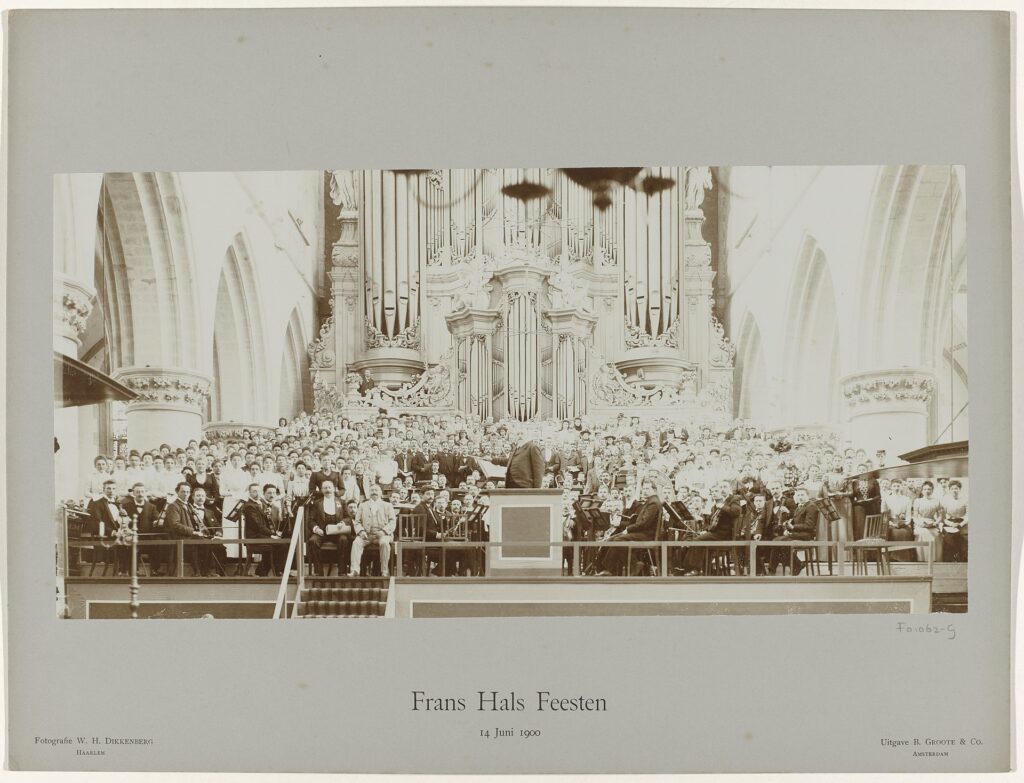
The light hits the façades of Grote Markt in that particular Dutch way: soft, almost silver, bouncing off the wetness of rain-darkened brick. It’s a Saturday morning in autumn, and the square isn’t empty—there are market stalls, cyclists, people carrying flowers and bread—but it doesn’t overwhelm. You can stand still here. You can look up at the ornate gable stones and watch the pigeons and actually think. This is Haarlem in essence: a place where the Netherlands feels like itself, without needing to perform for visitors. Just fifteen minutes by train from Amsterdam , the capital of North Holland province moves to a gentler rhythm. The canals are there, yes. The bicycles, the brown cafés, the sense that you’ve stepped backward in time—all present. But the energy is neighbourly rather than frantic, and that difference matters enormously. The Heart: Grote Markt and Sint-Bavokerk Any visit…
Café Olivier in Utrecht is a working Belgian bar inside a deconsecrated 19th-century church. The pulpit is still there. The stained glass is still there. The pews have been replaced with long wooden tables where students, workers, and retired professors all somehow end up sharing a Trappist beer. It’s the kind of place that makes you understand why the Dutch are so comfortable with the quiet strangeness of their country — nothing here is trying to impress you, but everything is worth looking at twice.
On a Thursday evening, the Vismarkt fills with students balancing paper cones of fried eierbal—rounded croquettes of ragout that burst with cream and spiced meat—while cyclists…
The Maas river curves lazily around Maastricht , and on a Saturday morning, the city’s oldest square fills with the smell of fresh bread, grilled cheese, and the particular…
Water meets cobblestone in Utrecht , and the difference is immediate. Sit at a café along the Oudegracht with a coffee cooling in front of you, and you’ll notice what makes…
The Mauritshuis sits so close to the water of the Hofvijver that on still mornings, the seventeenth-century townhouse and its gabled reflection seem to occupy the same space. It’s…
The Erasmus Bridge appears first as you approach Rotterdam by train—a white swan of steel and cable suspended over the Maas, its single pylon rising like a bent neck against the…
The bullet holes are still there. Two of them, embedded in the wooden doorframe of the Prinsenhof Museum , where Balthasar Gérard’s musket fire killed William of Orange on 10 July 1584. They sit at chest height, dark punctures in pale oak, as real and immediate as anything in this small town between The Hague and Rotterdam . Stand close enough and you can feel the weight of a moment that changed everything—not just for the Dutch Revolt, but for…
A stroopwafel is two thin waffle layers, bound together with warm caramel syrup, served on top of your coffee cup so the rising steam softens the middle. It was born in 19th-century Gouda, where a local baker used up the day’s leftover dough and the last of the syrup barrel. The result is the small daily joy of every Dutch café — placed on your saucer without asking, warm against your fingers, gone in three bites. A real stroopwafel should be slightly chewy in the middle, not hard like the ones in supermarket bags. The best ones are still sold fresh at market stalls in Gouda on Wednesdays.
If you’re enjoying this letter, the best thing you could do is forward it to one friend who’d love the Netherlands too. This newsletter grows by word of mouth alone — every single subscriber came from someone sending it to someone else. Thank you for being one of the first.
Our daily newsletter is free and always will be. But for less than the price of a pint, you can upgrade to our Sunday Premium Edition, which gives you access to our travel deep dives, curated itineraries, and regional stories. Consider buying us a stroopwafel — it’s the Dutch way to say thank you.
Also From Our Family
Love Ireland too? Over 64,000 readers wake up each morning to the Love Ireland newsletter — loveireland.substack.com
Powered by Viator. Some links are affiliate links — we may earn a small commission at no extra cost to you.
Other newsletters you might like
Scottish Rugby Fans
The best Scottish rugby updates, straight to your inbox — Six Nations, the Nations Championship, Glasgow and Edinburgh. Only when there's something worth reading.
A newsletter for Londoners who want to rediscover their own city. Travellers planning their first or fifth visit. Anglophiles who fell in love with London through literature, film, or a rainy afternoon on the South Bank.