Ingredients
Method
- Butter a 20 cm (8 in) square tin or 23 cm (9 in) round tin and line the base with baking paper.
- Beat the soft butter and sugar together until smooth. Beat in about two-thirds of the egg and the lemon zest. Keep the rest of the egg in a cup and stir in the milk.
- Add the flour and salt and knead briefly into a smooth dough. To test it, roll a little into a sausage: if you can bend it without it cracking, it is ready.
- Press the dough evenly into the tin with your knuckles or the back of a wet spoon, about 1 1/2 cm (5/8 in) thick. Brush with the egg and milk and leave to rest for 30 minutes.
- Heat the oven to 180°C / 160°C fan / 350°F / Gas 4.
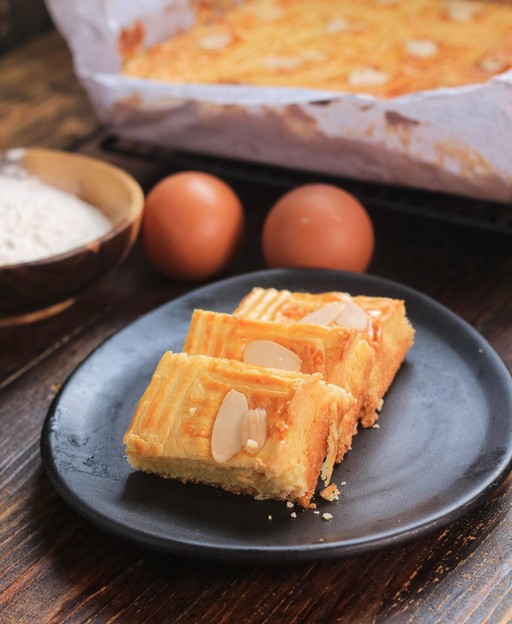
- Brush the top again, then draw a fork across it in diagonal lines both ways to make a diamond pattern. Scatter over the flaked almonds if using.
- Bake on a rack in the middle of the oven for 25-30 minutes, until golden on top. The centre should still feel slightly soft; it firms up as it cools.
- Leave in the tin for about an hour before turning it out, then cut into 16 small squares.
Notes
American kitchens: plain flour = all-purpose flour. Use real butter, salted or unsalted (with salted butter, leave out the salt): the cake is named after it.
Variations: Robèrt van Beckhoven fills his boterkoek with a layer of almond paste between two rounds of dough (500 g paste for two 17 cm cakes, 190°C / 170°C fan / 375°F / Gas 5 for about 20 minutes). 24Kitchen tops it with 50 g flaked almonds.
Storage: brush the warm cake with a little extra butter after baking: Robèrt van Beckhoven says the thin film keeps it soft for longer. Leftover raw dough can be rolled out and frozen (also his tip).
Sources: quantities and times checked against the boterkoek recipes of Robèrt van Beckhoven (MAX Vandaag), 24Kitchen and Dairy Farmers of Canada, with Koopmans' cooling time. Checked November 2026.
Free: ten more Dutch recipes, from stroopwafels to snert, are in our free Netherlands travel guide (PDF): get the free guide.