
Slow Days in Delft
Vermeer’s quiet canal city, with its Delft Blue, its two great churches and the staircase where William of Orange fell.
An introduction to Delft
Some towns shout. Delft clears its throat, smiles and lets you find your own way. It sits in South Holland between The Hague and Rotterdam, close enough to both that you could dismiss it as a stop on the way. Yet it was one of the most important towns of the Dutch Golden Age. It was granted city rights in 1246, and its name comes from the old word for digging, the canal that gave the place its shape. Four centuries later it produced an extraordinary cluster of talent. Johannes Vermeer was born here in 1632, and so, in the same year, was Antonie van Leeuwenhoek, the pioneer of the microscope. The jurist Hugo Grotius had been born nearby in 1583.
The city’s story has dark chapters too. In 1584 William of Orange, father of the Dutch nation, was assassinated inside his own residence. In October 1654 a gunpowder store exploded in what became known as the Delft Thunderclap. It flattened a great swathe of the town and killed the painter Carel Fabritius, whose small masterpiece The Goldfinch dates from that same year. Delft rebuilt, as Dutch cities do, with patience and good brickwork.
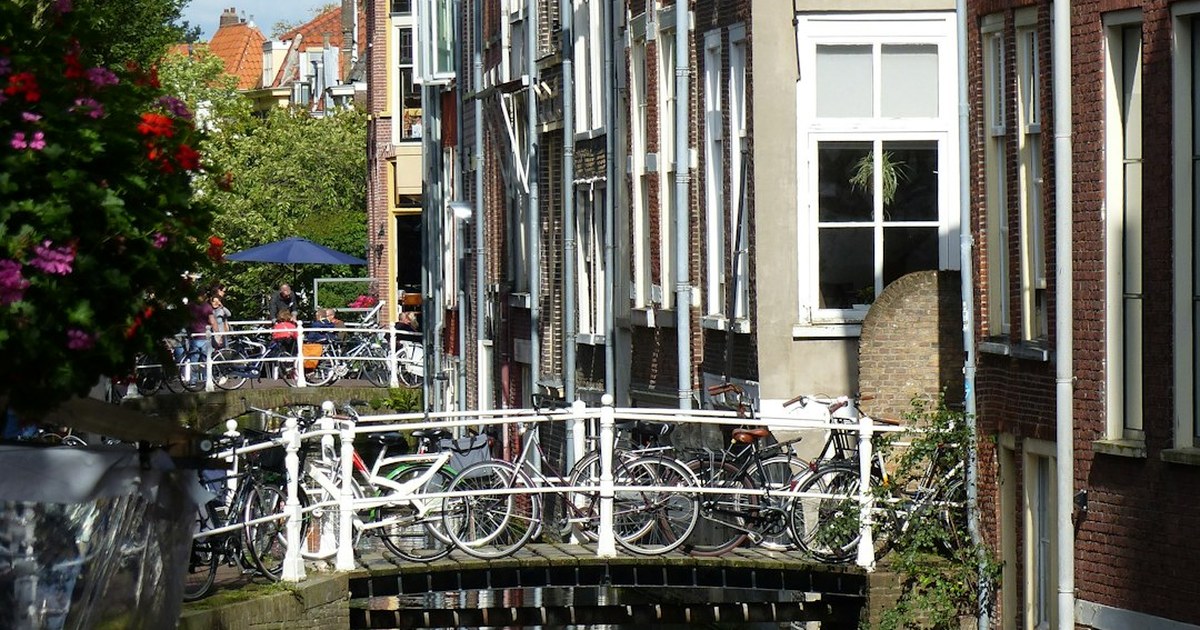
What you find today is a place of tree-lined canals, humpbacked bridges and a huge, handsome market square. Cyclists glide past gabled merchants’ houses. There are blue-and-white tiles in the shop windows, and the bells of two enormous churches mark the quarter-hours. The pace is the point. Delft is a student town, home to the Delft University of Technology, so there is youthful energy in the cafés. But it never feels hurried, and Sunday is perhaps its best day of all.
This guide walks you through the city in its natural order. We start on the Markt, move to the pottery that carried Delft’s name around the world, and stand in the Prinsenhof where history turned on a single pistol shot. Then we look for Vermeer, and finish by drifting along the canals. A three-day itinerary, a few places to stay and our straightforward advice follow. Pack comfortable shoes and a willingness to stop and stare.
In this email
- The Markt and its two churches: the Nieuwe Kerk, the Oude Kerk and the old Stadhuis
- Royal Delft and Delft Blue: how a town learned to imitate China, then surpassed it
- The Prinsenhof: William of Orange, the staircase and the Dutch Revolt
- Vermeer’s Delft: the Vermeer Centrum and the places he knew
- The slow canals: the best waterside walks, cafés and a boat trip
- Itinerary, stays and closing thoughts: three unhurried days, where to sleep and our verdict
Best time to visit: Late April to early October is the sweet spot, when terraces fill and the canals are at their greenest. April is especially pretty, with tulips in bloom across the nearby bulb fields and King’s Day on 27 April turning the whole town orange. September is calmer, with soft light and fewer coach parties. Winter is quiet and atmospheric, ideal for museums and hot chocolate, though the days are short. Delft is compact, so even a grey day works well.
Travel logistics: Delft has its own railway station, and its modern station hall is topped by a lovely 2015 city hall. From The Hague it takes around ten minutes, from Rotterdam around fifteen, and from Amsterdam or Schiphol roughly an hour, sometimes with a change. The historic centre is small and entirely walkable, though hiring a bicycle is a joy if you are confident among Dutch cyclists. Many museums keep Monday and Sunday-morning hours that differ from the rest of the week, so check opening times before you go. Shops here generally open on Sundays only from around midday. Book Royal Delft’s workshops and the Prinsenhof’s busiest slots ahead in summer.
Continue reading with a Premium subscription
This is a Love Netherlands Sunday Premium guide. Premium subscribers receive the full article in their inbox every Sunday and unlock the full archive of past editions.
Become a Premium subscriber →Tours & experiences you might love


Powered by Viator. Some links are affiliate links — we may earn a small commission at no extra cost to you.