

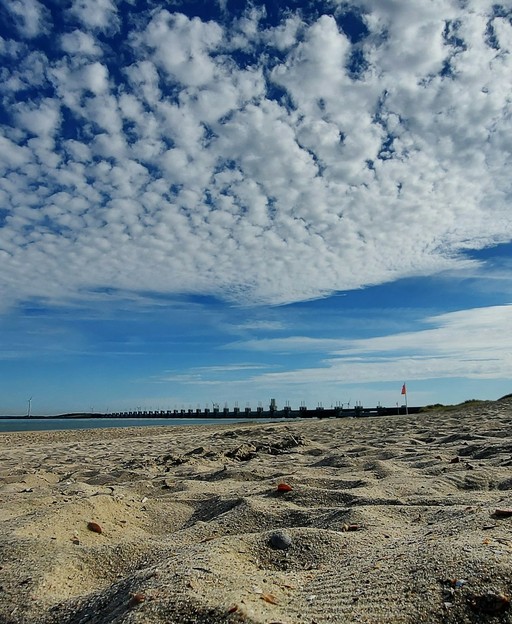
The Delta Works in Zeeland form the largest flood-defence system in the Netherlands, and you can visit its centrepiece in a single day. The Oosterschelde storm surge barrier stands about 9 km long, rests on 65 concrete piers, and sits just off the Zeeland coast. Visitors can walk out onto the Neeltje Jans island beside it, then drive on to a flood museum and a medieval harbour town.
Love the Netherlands? Join our free newsletter for hidden Dutch gems → inlovewithnetherlands.com/subscribe
Why the Delta Works in Zeeland Matter
On the night of 31 January 1953, a North Sea storm surge broke through dikes across the south-west Netherlands. The flood killed 1,836 people in the country, and Zeeland suffered the worst damage. Whole villages stood under water for weeks.
The Dutch government answered with the Delta Plan. Engineers shortened the coastline by closing sea inlets with dams, sluices and barriers. Work ran for decades, and the last major piece, the Maeslant barrier near Rotterdam, was finished in 1997.
The Oosterschelde barrier tells the most interesting story. Planners first intended a solid dam. Fishers, scientists and local people protested, because a closed dam would kill the tidal estuary and its oyster and mussel beds. The government changed course and built a barrier with gates that stay open in normal weather. The gates close only when a severe storm surge threatens. The estuary kept its tides, and Zeeland kept its shellfish. Crews opened the barrier in October 1986.
Start at Neeltje Jans
Neeltje Jans is an artificial island that served as a construction base while workers built the barrier. The island hosts the Deltapark visitor centre, where exhibitions explain how the barrier works and why the Netherlands needs it. You can walk close to the piers, look at the huge steel gates and watch the tide run through the openings.
Check opening days, ticket options and any seasonal programme on the official Neeltje Jans website before you travel. Hours and prices change, so we do not list them here.
Wear windproof layers. The island is exposed, and even a mild autumn day feels cold on the water. Bring sturdy shoes for the walkways, and keep a camera ready for the long view along the barrier at low light.
Visit the Watersnoodmuseum in Ouwerkerk
The Watersnoodmuseum (Flood Museum) stands in Ouwerkerk on the island of Schouwen-Duiveland. It occupies four enormous concrete caissons. Engineers sank these boxes in 1953 to close the last gap in the dike at Ouwerkerk, and the caissons now hold the museum itself.
The displays follow the flood through personal stories, photographs and objects. Many visitors find it moving. Allow at least an hour, and read the museum’s official website for current opening details.
Pair this stop with Neeltje Jans for a full day. Together they show both sides of the story: the disaster and the engineering response.
Cross the Zeelandbrug
The drive between the two sites crosses the Zeelandbrug, which opened in 1965 and spans the Oosterschelde between Noord-Beveland and Schouwen-Duiveland. At roughly 5 km, it was the longest bridge in Europe when it opened. Wikipedia keeps a clear summary of the bridge’s history.
Drive it slowly if traffic allows. Water spreads out on both sides, and the sky seems to take up half the view. Photographers often stop at the lay-bys near either end.
Walk the Streets of Zierikzee
Zierikzee is the main historic town on Schouwen-Duiveland. Its old harbour, brick houses and narrow lanes make a good lunch stop after the museum. The unfinished Sint-Lievensmonstertoren dominates the skyline, because builders never finished it.
Stroll from the harbour to the town gates, then pick a café with a view of the water. Zeeland is also known for its seafood. Look for mussels, which growers harvest from the Oosterschelde waters, and for local oysters. Ask the staff what came in that week.
Add Some Beach Time
Zeeland has long sandy beaches on its North Sea coast, and towns such as Renesse and Domburg make easy stops. A short walk along the shore gives you a break from museums and a different view of the sea that the Delta Works hold back. Pack a flask of something hot, because the wind can bite even in sunshine.
Many visitors turn the day into a weekend. Zeeland has plenty of small hotels, campsites and holiday cottages, so you can stay near the coast, rise early and watch the light change over the water. Book ahead for school holidays and sunny weekends, when families fill the beaches.
How to Get There
A car makes this trip much easier. Neeltje Jans lies roughly an hour from Rotterdam and under two hours from Amsterdam by car, depending on traffic. The roads are good and the route is simple.
Public transport works but takes longer, because you must change between train and bus and the services run less often outside the main towns. Use the 9292 journey planner to check live connections before you set out. Cyclists can also reach the area along the coastal routes; our complete guide to cycling in the Netherlands explains how the national network works.
When to Go
Tide and weather change the mood of the coast hour by hour, so build some slack into your plans.
Spring and early autumn give the best mix of mild weather and open facilities. Summer brings beach crowds to the coast. Winter can be wild and beautiful, but wind and rain make the exposed island hard work. Check forecasts for wind speed, because strong gusts can shorten a walk on Neeltje Jans.
A Simple One-Day Plan
- Morning: Arrive at Neeltje Jans and explore the Deltapark and the walkways beside the barrier.
- Midday: Drive across the Zeelandbrug to Schouwen-Duiveland.
- Early afternoon: Visit the Watersnoodmuseum in Ouwerkerk.
- Late afternoon: Walk around Zierikzee and eat seafood by the harbour.
If you want a longer stay, our Zeeland travel guide covers more of the province, and our guide to the Biesbosch shows another landscape that the Delta Works shaped.
You Might Also Enjoy
- Zeeland Travel Guide
- Into the Drowned Lands: Your Complete Guide to the Biesbosch
- Kinderdijk Windmills Guide
Plan Your Netherlands Trip
Ready to build a full itinerary? Visit our Start Here page for trip-planning guides, regional overviews and ideas for every season.
Delta Works in Zeeland: Frequently Asked Questions
Can you visit the Delta Works in Zeeland without a car?
Yes, but the trip takes longer. You can combine trains and buses, and the 9292 planner shows live routes. A car saves a lot of time if you also want to see Ouwerkerk and Zierikzee.
How long does a visit to the Oosterschelde storm surge barrier take?
Plan two to four hours at Neeltje Jans, depending on how many exhibitions you join. Add another hour for the Watersnoodmuseum and time for a relaxed lunch in Zierikzee.
What was the 1953 flood in the Netherlands?
The 1953 North Sea flood hit the south-west Netherlands on 31 January and 1 February. It killed 1,836 people and led directly to the Delta Plan.
When is the best time to visit Zeeland for the Delta Works?
Spring and early autumn offer mild weather and fewer crowds than midsummer. Always check the official sites for opening days before you travel.
Join Netherlands Lovers
Every week, discover the Netherlands beyond the tourist trail — hidden villages, local recipes, cycling routes, and travel insights you won’t find in any guidebook.
Subscribe free — enter your email:
Free forever · One email per week · Unsubscribe anytime
Tours & experiences you might love


Powered by Viator. Some links are affiliate links — we may earn a small commission at no extra cost to you.