

A Weekend in Nijmegen
Roman roots, a Rhine-fed river, a very modern island and a walk that fills a city with flowers
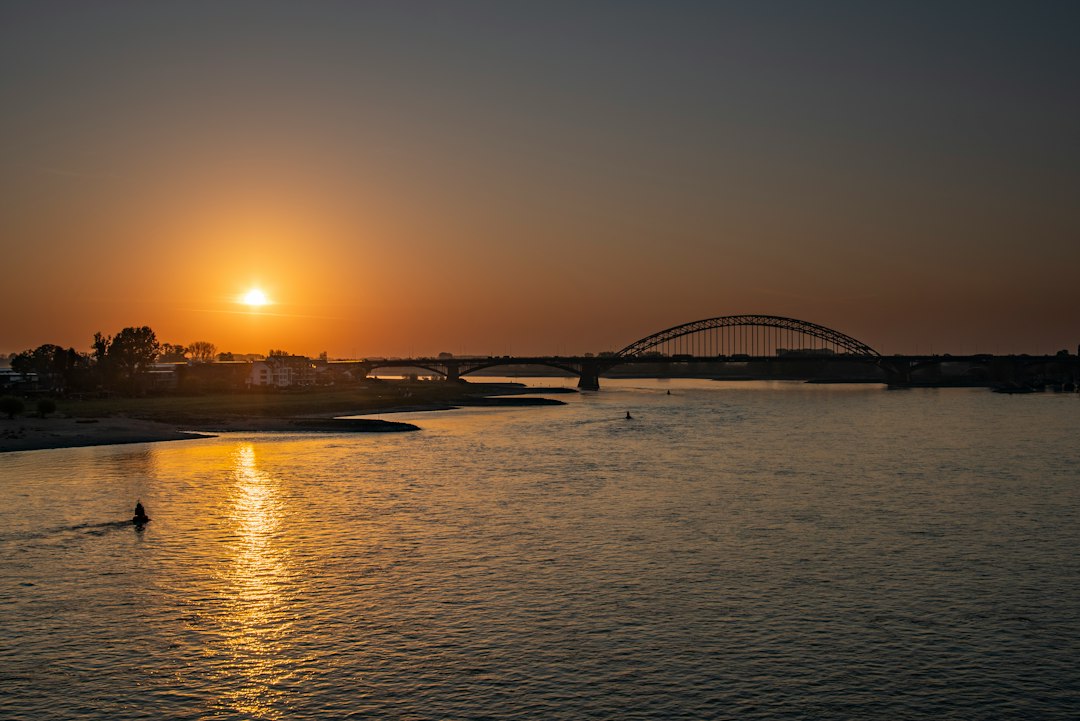
An introduction to Nijmegen
Ask a Dutch person for the oldest city in the Netherlands and you will get a quick, friendly argument. Nijmegen’s claim is the strongest. Around the turn of the first millennium the Romans planted a military camp on the hill above the Waal. A town of the Batavi, the local tribe, followed, and Rome called it Noviomagus, “new market”. Emperor Trajan later granted it city rights, around AD 100. Nijmegen celebrated its 2,000th birthday in 2005, and it remains one of the few Dutch places where you can walk a street that has been a street for nearly two thousand years.
The city sits on a rare thing in the Low Countries: a proper hill. It is a ridge of glacial deposits, pushed up in the Ice Age, with the broad Waal curving beneath it. The Waal is the Rhine’s main channel through the Netherlands, and here it feels more like an estuary than a river. Wide skies, long barges and heavy bridges set the scene. Most Dutch cities offer canals and gables. Nijmegen adds slopes, viewpoints and a sense of looking out.
It is also a layered city, and the layers are not all gentle. Charlemagne is said to have kept a palace on the Valkhof hill, and Frederick Barbarossa rebuilt it in grander style. Nijmegen was bombed by mistake in February 1944, with the loss of around eight hundred lives. In September 1944 it saw some of the bravest fighting of Operation Market Garden, when American paratroopers crossed the Waal in flimsy canvas boats under fire. The city was rebuilt, and today it is youthful and relaxed, thanks to the large Radboud University student population and a calendar that includes the biggest walking event on earth.
This guide takes you through six strands of Nijmegen: the Roman beginnings, the Valkhof, the old town and 1944, the river and its new island, the Four Days Marches, and the wetlands of the Ooijpolder. They fit comfortably into a long weekend, and the city is small enough to walk or cycle between them.
In this email
- Noviomagus: Roman Nijmegen, from the camps on the hill to the museum cabinets
- The Valkhof: the emperors’ hill, the chapel that survived and the view over the river
- The old town and 1944: Hezelstraat, the Grote Markt and the story of the Waal crossing
- The Waal and Veur-Lent: the river, the bridges and the island park that came from moving a dyke
- The Four Days Marches: a July tradition of 40,000-odd walkers and a city in celebration
- The Ooijpolder: floodplain, wild horses, beavers and big skies just east of the city
After the six sections you will find a three-day itinerary, notes on where to stay, and a few words in closing.
Best time to visit: May to September is the easy choice, with long evenings and terraces open along the Waalkade. September also brings the Market Garden commemorations, which are moving to witness. Mid-July is the Four Days Marches, which is wonderful but means packed trains and hotels booked many months ahead. Autumn and winter are the season for geese in the Ooijpolder, so bring a flask and a warm coat.
Travel logistics: Nijmegen Centraal has direct trains from Amsterdam and Utrecht. Allow roughly an hour and a quarter from Amsterdam and under an hour from Utrecht, and check the current timetable. Most of what you want to see lies within a flat or gently sloping walk of the station and the old centre. Hire a bike for the island and the Ooijpolder, because the Dutch cycling network is at its best here. Dutch trains take contactless bank cards at the gates, and you can do the whole weekend without a car.
Continue reading with a Premium subscription
This is a Love Netherlands Sunday Premium guide. Premium subscribers receive the full article in their inbox every Sunday and unlock the full archive of past editions.
Become a Premium subscriber →Tours & experiences you might love


Powered by Viator. Some links are affiliate links — we may earn a small commission at no extra cost to you.