
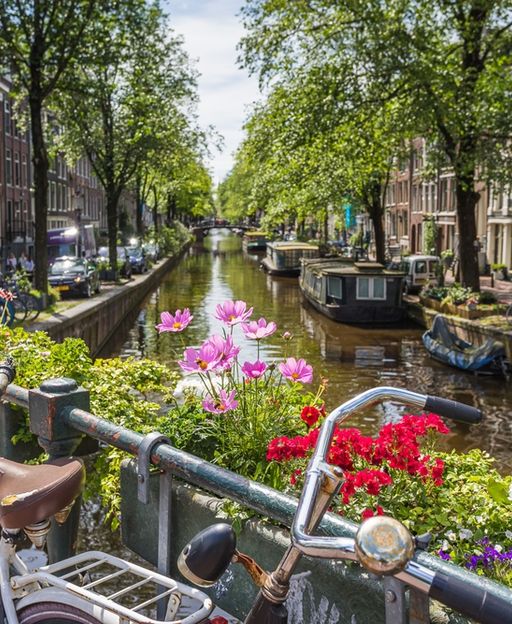
Walk ten minutes west of Amsterdam’s main canals and the city changes. The streets narrow. The canal houses feel lower. The tourists thin out. And somewhere between the bicycle bells and the smell of fresh coffee, you start to understand what Amsterdammers mean when they say a place has ziel — soul.
This is the Jordaan. And it is, by most measures, the neighbourhood the Dutch love best in their own country.
A Quarter Built on the Wrong Side of the Canal
The Jordaan did not begin as a desirable address. In the 17th century, Amsterdam was expanding fast. Merchants and spice traders needed space. The city planners drew four great semicircular canals sweeping out from the centre — the Herengracht, the Keizersgracht, the Prinsengracht. Elegant. Grand. Expensive.
Somebody had to house the workers who built it all. That was the Jordaan.
Labourers moved in. So did tanners, dyers, and candlemakers. French Huguenot refugees arrived, fleeing religious persecution in France. Sephardic Jews came too. The name itself may come from the French word for garden — jardin — or from the Jordan River, a nod to the many faiths living side by side.
The streets were tight. The houses were small. The smell from the tanneries was not pleasant. But the people were vivid. And the community they built was unlike anything else in Amsterdam.
Hidden Courtyards the City Forgot to Advertise
One of Amsterdam’s finest secrets hides behind Jordaan doorways. Look for a plain entrance cut into a terrace wall — sometimes just an archway, sometimes a gate left slightly open. Step through. Inside, you find a hofje: a small quiet courtyard surrounded by almshouses, built in the 17th or 18th century to shelter elderly women.
Amsterdam holds around 50 of these courtyards. The Jordaan contains many of the best. The Begijnhof, just east of the neighbourhood, draws the most visitors. But smaller hofjes sit inside the Jordaan itself — the Karthuizershofje, the Suykerhoffhofje — behind gates that are often unlocked during the day.
The rule is simple: enter respectfully, speak softly, and leave the residents in peace. These are still lived-in homes.
They are also some of the most peaceful spots in one of Europe’s busiest cities.
The Nine Streets That Locals Refuse to Recommend
De Negen Straatjes — the Nine Streets — appear on every Amsterdam travel list. Nine small streets cut between the main canals. They hold independent bookshops, vintage clothing, Dutch cheese, specialist ceramics. Every shop has been there longer than you’d expect.
What the lists miss is the attitude. Amsterdammers are oddly protective of this area. They recommend it to close friends and wince slightly when it fills with tourists in July. The streets feel personal to them in a way that the main tourist circuit does not.
The Nine Streets were pedestrianised early. The independent businesses survived the chain-store wave that took other Amsterdam neighbourhoods. If you want to understand what Amsterdam is trying to hold onto — not what it’s selling — walk here on a Tuesday morning.
Enjoying this? Get stories like this every week from Love Netherlands — Subscribe free →
Brown Cafés and the Art of Doing Nothing
In the 1950s and 1960s, the Jordaan had its own music. A sentimental, slightly mournful Dutch genre — Jordaan schlager — was performed in the neighbourhood’s brown cafés by men in waistcoats. It was working-class, proud, and entirely its own.
A bruine kroeg — brown café — is not simply a pub. It is a state of mind: dark wood, low ceilings, a bar where the landlord knows every regular, and beer served without ceremony or cocktail lists. The Jordaan holds some of Amsterdam’s oldest examples.
Go for the beer. Stay for what it tells you about the Dutch idea of a good evening — not loud, not rushed, not performed for anyone else. Just a table, a drink, and an hour that belongs to no one.
How to Be in the Jordaan — Not Just See It
The Jordaan is not a museum. People live here, and many of them are paying rents their grandparents would find extraordinary. To experience the neighbourhood properly, keep a few things in mind.
Arrive early. Before nine in the morning, the streets belong to residents and the canal light is extraordinary — low, gold, catching the water at an angle that photographs cannot fully capture.
Walk without a route. The Jordaan’s streets were not designed by a city planner — they followed old field boundaries and polder ditches. Getting slightly lost is not a mistake here. It is the point.
Eat a broodje at a sandwich shop with no English menu. Order by pointing. Sit outside if you can. Notice that most people around you are not tourists.
The Jordaan sits just west of the main canal ring. If you want to understand how Amsterdam’s Golden Age merchants built those iconic canal houses, our article on the story behind Amsterdam’s canal houses explains the economics behind the architecture. And for a full guide to where to start with the Netherlands, visit our Start Here page.
Frequently Asked Questions
What is the best time to visit the Jordaan in Amsterdam?
Spring (April–May) and autumn (September–October) offer the best combination of good light and lighter crowds. Early morning on any weekday is the quietest time — the neighbourhood belongs to its residents before nine o’clock.
Where exactly is the Jordaan in Amsterdam?
The Jordaan lies west of Amsterdam’s main canal ring, bounded by the Prinsengracht to the east, Lijnbaansgracht to the west, Brouwersgracht to the north, and Leidsegracht to the south. It is a 15-minute walk from Amsterdam Centraal station.
Is the Jordaan worth visiting if I only have one day in Amsterdam?
Yes — the Jordaan offers a completely different experience to the main tourist circuit. Half a day here, combined with the Anne Frank House (on the Prinsengracht, right at the Jordaan border), gives you a fuller picture of Amsterdam than most day-trippers see.
What are hofjes and how do I visit them in the Jordaan?
Hofjes are historic almshouse courtyards hidden behind entrances in terrace walls. Many in the Jordaan have unlocked gates during daylight hours. Enter quietly and respectfully — they are still occupied homes. The Karthuizershofje on Karthuizerstraat is one of the largest and most atmospheric.
The Jordaan will not overwhelm you. It will not try to impress you with scale or spectacle. It will offer a quiet canal, a good cup of coffee, and — if you sit still long enough — the particular feeling the Dutch call gezellig: warm, familiar, completely at ease.
You will not want to leave.
Love Netherlands — Free Every Week
Canal towns, hidden villages, Dutch stories. A free letter about the Netherlands — written slowly, delivered weekly.
Love more? Join 64,000 Ireland lovers → · Join 43,000 Scotland lovers → · Join 30,000 Italy lovers →
Free forever · One email per week · Unsubscribe anytime
Tours & experiences you might love


Powered by Viator. Some links are affiliate links — we may earn a small commission at no extra cost to you.