

Image: Shutterstock
Johannes Vermeer was born in Delft in 1632 and spent almost his entire life there. He left the city only a handful of times. He painted only about 35 pictures that we know of. And yet those 35 pictures changed how we think about light, windows, domestic quietness, and the slow unfolding of an ordinary afternoon.
If you want to understand why he painted the way he did, you have to go to Delft.
The city hasn’t changed much
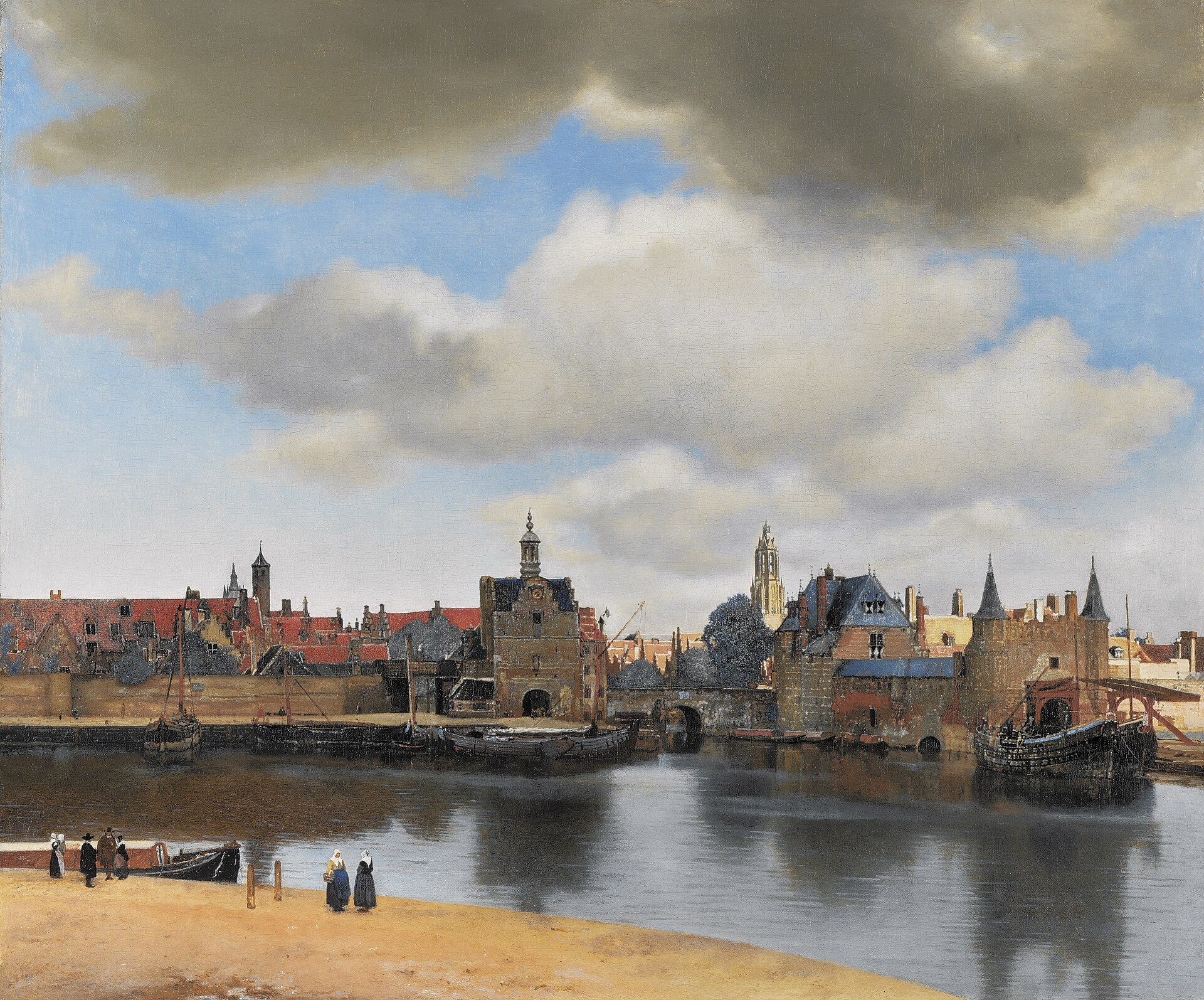
That’s the remarkable thing. Delft escaped most of the industrial destruction that reshaped bigger Dutch cities in the 19th and 20th centuries. Walk along the Voldersgracht canal today and you’re walking past the same buildings Vermeer saw every morning on his way to his studio. The Oude Kerk (Old Church), where he was baptised and buried, still leans slightly where the medieval foundations settled into soft Dutch soil. The Markt — the main square — looks much as it did in his famous View of Delft, now hanging in the Mauritshuis in The Hague.
Why the light matters
Vermeer’s genius was his ability to paint light as if it were a tangible thing — falling across a wall, sliding along a lace cuff, catching the edge of a brass pitcher. Stand in any quiet Delft street in the morning and you’ll start to see why he saw it that way. The light in the Netherlands has a particular quality — pale, clean, slightly northern, filtered by the nearby sea. It falls softly onto white stucco walls, onto stretches of canal, onto the sides of brick houses. Vermeer had thirty years to study it, and he studied it well.
What to see in Delft
- Vermeer Centrum Delft — a small museum on the site of his painters’ guild, with high-quality reproductions of all his paintings. Not the real thing, but it tells the story of his life and technique better than anywhere else.
- The Oude Kerk — his tomb is here. The leaning tower is unmistakable.
- The Markt — the main square, with the Nieuwe Kerk opposite the Town Hall, essentially unchanged from Vermeer’s time.
- Royal Delft (De Koninklijke Porceleyne Fles) — the last remaining 17th-century Delftware factory, still producing the iconic blue-and-white pottery by hand.
Plan half a day. Delft is small — you can walk the historic centre in an hour — but you’ll want longer to sit in a café, watch the light move, and understand the slow Dutch afternoon that taught one of the greatest painters of all time everything he knew.
Tours & experiences you might love


Powered by Viator. Some links are affiliate links — we may earn a small commission at no extra cost to you.