

πŸ“± The Love Netherlands app is here β€” now on iPhoneDownload Love Netherlands on the App Store

The Hague and Scheveningen: Sea, Art and the Seat of Power

The Hague and Scheveningen: Sea, Art and the Seat of Power

Where Dutch democracy meets Golden Age masterpieces and the grand sweep of the North Sea coast
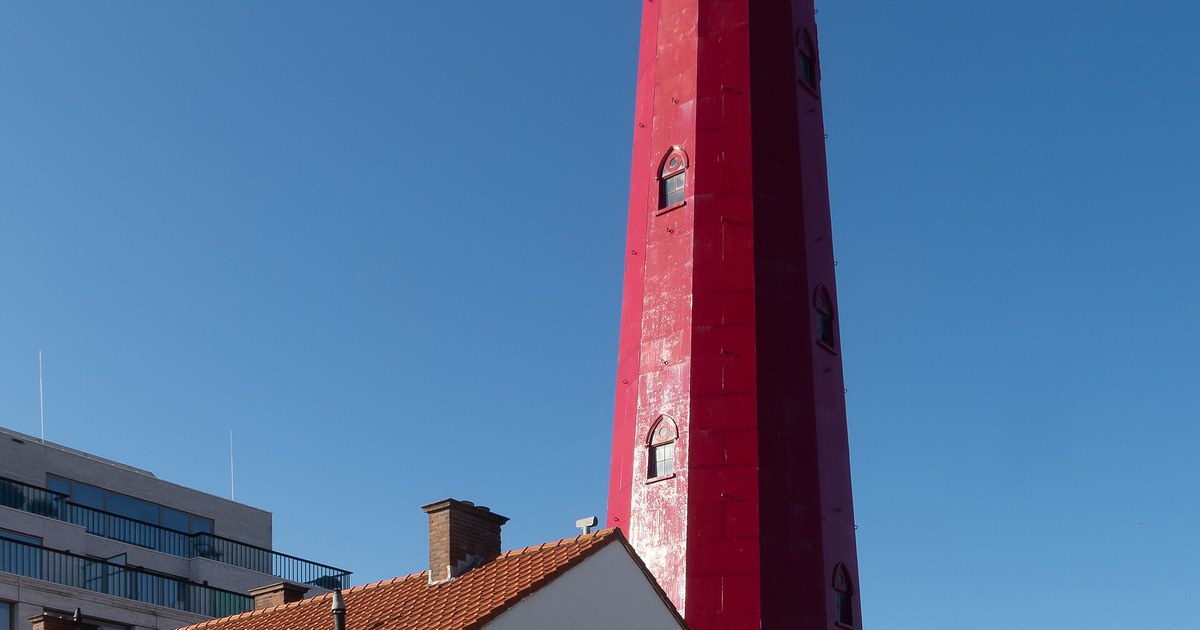
Twente, Netherlands
Twente, Netherlands

An introduction to The Hague and Scheveningen

There is something quietly remarkable about The Hague. It is not the Netherlands’ constitutional capital β€” that honour belongs to Amsterdam β€” yet it is where the country is actually governed, where international justice is administered, and where some of the world’s most celebrated paintings hang in a modest 17th-century mansion on the edge of a pond. The Dutch have a word for this kind of understated excellence: gezellig β€” convivial, warm, quietly perfect. Den Haag, as the locals call it, embodies it completely.

The city takes its name from des Graven Hage, meaning “the Count’s Hedge” β€” a reference to the hunting grounds of the medieval Counts of Holland who built a small castle here in the 13th century. That castle became the Binnenhof, still the working heart of Dutch parliamentary democracy eight centuries later. Around it grew a city of grand tree-lined boulevards, elegant townhouses, and international institutions that have shaped the world’s understanding of peace and justice. Today The Hague is home to the International Court of Justice, the International Criminal Court, and more than 160 international organisations. It is, in its own quietly confident way, the legal capital of the world.

Yet The Hague is also wonderfully liveable, and its pleasures are thoroughly human-scaled. You can spend a morning standing in front of Vermeer’s Girl with a Pearl Earring in the Mauritshuis and the afternoon eating fresh herring on the promenade at Scheveningen, the city’s beloved North Sea beach district just four kilometres away. The journey between them takes fifteen minutes by tram, and the contrast β€” from gilded 17th-century interiors to bracing sea air and the crash of Atlantic waves β€” is one of the most satisfying half-days you can spend anywhere in northern Europe.

Scheveningen itself rewards far longer than an afternoon. One of The Hague’s eight districts, it has been a fashionable seaside resort since the 19th century, when the grand Kurhaus Hotel opened on its promenade in 1885 and Dutch aristocracy arrived by carriage to take the sea air. The beach is long, wide, and lively with beach clubs and seafood stalls. The pier stretches out into the grey-green North Sea. And behind the dunes, the elegant streets of the Statenkwartier neighbourhood offer some of the best cafΓ©-going in the city. Come for a weekend and you will find yourself wondering why this place is not already on every traveller’s list.

In this email

  • The Mauritshuis: a Golden Age gem on the Hofvijver
  • The Binnenhof: eight centuries of Dutch democracy
  • The Peace Palace: the world’s courtroom
  • Escher in Het Paleis: impossible worlds made real
  • Scheveningen: sea air, sand and a grand promenade
  • Madurodam and the Statenkwartier: miniature wonders and neighbourhood charm

Best time to visit: June to August brings the warmest weather and Scheveningen truly comes alive, with beach clubs in full swing and the long evenings golden. May and September offer fewer crowds and still-pleasant temperatures β€” ideal for museum-hopping and cycling. Winter has its own austere appeal: the Kurhaus looks magnificent against a stormy North Sea sky, and the city’s extraordinary indoor attractions are never better appreciated than on a raw February afternoon.

Travel logistics: The Hague has two main railway stations β€” Den Haag Centraal and Den Haag HS β€” with fast Intercity trains from Amsterdam (approximately 50 minutes), Rotterdam (25 minutes), and Utrecht (40 minutes). The city’s tram network, operated by HTM, is excellent: Tram 1 and Tram 9 run directly from the city centre to Scheveningen. A day ticket for unlimited travel costs around €5. The Hague is flat and very cycle-friendly; OV-fiets rental bikes are available at both main stations.

The Mauritshuis: A Golden Age Gem on the Hofvijver

If you visit The Hague for no other reason than to stand in front of Vermeer’s Girl with a Pearl Earring, the journey will have been worth it entirely. The painting β€” a small oil on canvas measuring just 44.5 by 39 centimetres β€” hangs in the Mauritshuis, a 17th-century patrician mansion on the edge of the Hofvijver, the Court Pond that mirrors the towers of the Binnenhof opposite. The setting alone is worth lingering over before you even step inside.

The Mauritshuis was built between 1636 and 1641 for Johan Maurits van Nassau-Siegen, a cousin of the House of Orange who served as governor of Dutch Brazil. It became the Royal Picture Gallery in 1822 and today houses around 800 works from the Dutch and Flemish Golden Age in intimate, domestic-scale rooms that feel more like a great collector’s home than a traditional museum. This is precisely its charm. You can see the entire collection in two to three hours, but most visitors find themselves slowing down, returning to favourites, sitting with a single painting for far longer than they expected.

The centrepiece, of course, is Vermeer’s haunting portrait from around 1665, whose subject β€” a young woman turning to glance over her shoulder, lips slightly parted, a single pearl at her ear β€” has inspired novels, films, and endless speculation. Tracy Chevalier imagined a story behind it; Peter Webber’s 2003 film gave it Hollywood glamour. But in the flesh, stripped of mythology, it is simply one of the most extraordinary things you will ever see: the luminosity of the flesh tones, the impossible depth of the dark background, the pearl that seems to glow from within. Arrive early if you can, when the room is quieter and the painting almost yours alone.

Do not rush past the rest. Rembrandt’s The Anatomy Lesson of Dr. Nicolaes Tulp, painted in 1632 when the artist was just 26, hangs here in its full dramatic power β€” a masterclass in portraiture and narrative ambition, seven faces arranged around a single corpse with a compositional confidence that announced a genius. Carel Fabritius’s tiny The Goldfinch, painted in 1654, the same year its creator was killed in a catastrophic gunpowder explosion in Delft, is heartbreakingly beautiful. And Vermeer’s View of Delft β€” wide, luminous, achingly calm β€” is widely regarded as the greatest cityscape ever painted. The Mauritshuis is a small museum with an almost impossibly large claim on the history of Western art.

The Binnenhof: Eight Centuries at the Heart of Dutch Democracy

Cross the Hofvijver by its narrow causeway and you step through the gateway of the Binnenhof, a medieval castle complex that has stood at the centre of Dutch political life for eight centuries. It is one of the oldest continuously used parliamentary buildings in the world, and it wears its age with a certain stately self-possession that feels entirely appropriate for a country that has been arguing politely about governance since the 13th century.

The complex was begun by Count William II of Holland, who started work on the great Gothic hall at its centre β€” the Ridderzaal, or Hall of Knights β€” around 1248. The hall’s soaring twin towers and pointed arches stand in striking contrast to the more sober 17th- and 18th-century wings that enclose the inner courtyard. Each year on Prinsjesdag β€” the third Tuesday in September β€” the King of the Netherlands delivers the Speech from the Throne in the Ridderzaal, arriving by golden coach from Noordeinde Palace in a ceremony of ceremonial pageantry that brings the city to a cheerful standstill.

A major programme of restoration has been under way since 2019, and the Dutch parliament has temporarily relocated to a nearby government building while work continues over the coming years. The exterior, the inner courtyard, and the reflective Hofvijver faΓ§ade β€” one of the most photographed sights in the Netherlands β€” remain accessible and absolutely worth your time. Check current visitor arrangements before you go. Even partly shrouded in scaffolding, the Binnenhof retains a powerful sense of centuries of democratic life continuing, unhurried and unbroken.

The Peace Palace: The World’s Courtroom

A twenty-minute walk northwest of the Binnenhof, through broad residential streets lined with embassy flags, stands one of the most symbolically weighted buildings in the world. The Peace Palace was inaugurated on 28 August 1913, funded by the Scottish-American industrialist and philanthropist Andrew Carnegie, who donated one and a half million dollars to provide a permanent home for international arbitration and the peaceful resolution of disputes between nations. The timing was, in retrospect, heartbreaking: just one year later, the guns of the First World War opened across Europe.

Designed in a grand Neo-Renaissance style by the French architect Louis Cordonnier and completed by Jan Luthmann, the palace is an imposing red-brick and sandstone building set behind ornate iron gates, its clock tower visible from some distance away. The nations of the world contributed its furnishings and decorations β€” stained glass from the Netherlands, marble from Italy, granite from Norway, tapestries from France β€” making it a kind of secular cathedral to international cooperation, built from the collective aspirations of a world that still believed diplomacy could hold.

Today the Peace Palace houses the International Court of Justice, the principal judicial organ of the United Nations; the Permanent Court of Arbitration; the Hague Academy of International Law; and one of the world’s largest international law libraries. Guided tours of the building run on weekdays and must be booked in advance through the official Carnegie Foundation website. Tours take visitors through the Courtroom of the International Court of Justice, the Great Hall of Justice, and the beautiful library reading rooms. Even from outside the gates, the building demands a respectful pause. This is where the law of nations is made real.

Escher in Het Paleis: Impossible Worlds Made Real

On the Lange Voorhout β€” a wide, elm-shaded boulevard that is among the most beautiful streets in The Hague β€” stands a graceful 18th-century palace that once served as the winter residence of Queen Emma, mother of Queen Wilhelmina. Today it is given over entirely to the work of Maurits Cornelis Escher, the Dutch graphic artist whose interlocking tessellations, impossible staircases, and mind-bending explorations of mathematical infinity made him one of the most widely reproduced artists of the 20th century.

Escher (1898–1972) was born in Leeuwarden and spent much of his career in Italy before returning to the Netherlands. His prints β€” woodcuts, lithographs, and mezzotints depicting endlessly looping waterfalls, hands drawing themselves into existence, and staircases that ascend forever without gaining height β€” have delighted mathematicians and architects as much as art lovers, and the museum does an excellent job of explaining the geometric principles behind his art without ever making the experience feel like a lecture. Children love it, which makes Escher in Het Paleis an unusually fine choice for a family afternoon.

The palace rooms themselves add an elegant counterpoint: Escher’s geometrically improbable black-and-white worlds displayed in gilded 18th-century interiors. Around 150 original works are on permanent display, and an interactive corner lets visitors create their own tessellations. The Lange Voorhout address also puts you within easy walking distance of the Panorama Mesdag β€” a vast circular panoramic painting created by the Dutch marine artist Hendrik Willem Mesdag in 1881, depicting the fishing village of Scheveningen as it appeared that year. At 14 metres high and 120 metres in circumference, with a diorama foreground that places you convincingly on a sand dune above the village and sea, it remains one of the finest surviving examples of the 19th-century panorama and a genuinely affecting piece of art β€” far more moving than its modest fame suggests.

Scheveningen: Sea Air, Sand and a Grand Promenade

Take Tram 1 or Tram 9 from the city centre and within fifteen minutes you are deposited at the Boulevard β€” Scheveningen’s long seafront promenade, where the North Sea stretches away to a grey-green horizon and the salt air hits you like a clean, cold gift. Scheveningen has been a fashionable resort since the early 19th century, and while it has inevitably acquired its share of tourist infrastructure β€” amusement arcades, candy-coloured beach clubs, fairground rides β€” it retains a genuine grandeur that most British seaside resorts can only admire from a distance.

The presiding presence is the Kurhaus Hotel, which has anchored the promenade since 1885. Its domed hall, white stucco faΓ§ade, and wide terrace facing the sea have welcomed royalty, musicians, and dignitaries for nearly 140 years, and even if you are not staying here, the grand Kurzaal reception room inside is worth stepping into for a coffee or a cold glass of something, if only to appreciate the scale of a room built to accommodate the confident leisure of a Belle Γ‰poque elite who believed the sea could cure everything.

The pier β€” De Pier β€” extends some 380 metres into the North Sea from the Boulevard, offering views back along the beach towards the Kurhaus and north towards the Wassenaar dunes. An observation tower at the pier’s head gives a panorama of the coast on clear days, and on still summer evenings the pier acquires a quietly melancholy, romantic quality that the Dutch seem to do particularly well. The beach itself is long, wide, and sandy, divided informally into numbered beach clubs β€” strandtenten β€” that range from family-friendly affairs with pancake menus and changing rooms to cooler, cocktail-serving operations that stay open deep into the evening in summer. Fresh herring from a seafood stall β€” raw, with raw onion, eaten Dutch-style by tilting your head back β€” is the only correct lunch.

For a quieter experience of the coast, walk northward along the Boulevard to where the crowds thin and the dunes begin to assert themselves. The Westduinpark, a nature reserve of wind-sculpted dunes, beach ponds, and scrub vegetation, stretches south from Scheveningen towards Kijkduin. Here Scheveningen drops its resort mask entirely and becomes simply beautiful.

Madurodam and the Statenkwartier

Between the city centre and Scheveningen lies one of the most quietly moving attractions in the Netherlands. Madurodam is a miniature park at scale 1:25, depicting Dutch buildings and landscapes in extraordinary detail β€” the Rijksmuseum, Schiphol Airport, Delft’s historic centre, Amsterdam’s canal houses, working windmills and lock gates and harbour cranes all rendered in meticulous miniature across a series of outdoor tableaux. Children adore it for the delicious vertigo of being giants; adults find themselves staying far longer than they planned, charmed by the craftsmanship and by something less easy to name.

The park was founded in 1952 by the Maduro family in memory of their son George Maduro, a Dutch Jewish law student who served as an officer in the battle against the German invasion in 1940, was captured, imprisoned, and died in the Dachau concentration camp in February 1945 at the age of 28. The park β€” colourful, lively, loved by hundreds of thousands of visitors each year β€” is his memorial: a celebration of Dutch life and landscape built from grief, a monument to everything worth preserving. His name is on the entrance gate. It is worth pausing over.

From Madurodam, it is a short tram or bicycle ride to the Statenkwartier, one of The Hague’s most rewarding neighbourhood discoveries. Named after the States-General, the Dutch parliament, it is a graceful quarter of Art Nouveau and early 20th-century townhouses built for the professional classes who followed government money into the city. The Frederikstraat and its surrounding streets are lined with independent shops, neighbourhood cafΓ©s, and restaurants that feel emphatically, pleasingly local β€” this is where Hagenezen, as residents call themselves, actually eat and drink, away from the tourist circuit. On a warm evening, a table outside one of the Statenkwartier’s neighbourhood cafΓ©s, with a glass of Dutch jenever and the easy hum of a city settling into itself, is as good as The Hague gets.

A Two-Day Itinerary

Two days is the ideal amount of time to take in The Hague and Scheveningen at a comfortable pace, though you could happily extend to three.

Day one β€” Art, history and the city centre: Begin at the Mauritshuis when it opens at 10am; allow two to three hours and resist the urge to rush. Walk the Hofvijver causeway to the Binnenhof courtyard, then continue on foot to the Panorama Mesdag (about fifteen minutes). After lunch in the city centre β€” the beautiful glass-roofed Passage arcade on the Buitenhof is a lovely spot β€” spend the afternoon at Escher in Het Paleis on the Lange Voorhout. In the evening, take the tram to the Statenkwartier for dinner at one of its neighbourhood restaurants, or simply pull up a chair at a street cafΓ© and watch the city wind down.

Day two β€” The coast, Madurodam and the Peace Palace: Start with Madurodam in the morning; it opens at 9am and is best appreciated before the midday crowds arrive. From there, take the tram down to Scheveningen for lunch β€” fresh herring on the Boulevard, or a beach club for something more substantial. Spend the afternoon on the beach or walking the pier. On your way back into the city in the late afternoon, stop at the Peace Palace for a guided tour, booked in advance; tours typically last about an hour. End the evening around the Plein, the broad square at the heart of the city, where cafΓ© terraces come alive after dark.

Where to Stay

For a splurge: Hotel Des Indes on the Lange Voorhout is The Hague’s most distinguished address β€” a 19th-century mansion hotel that has welcomed royalty, diplomats, and celebrated performers for well over a century. The rooms are high-ceilinged and beautifully appointed, the breakfast is exceptional, and the location puts you within easy walking distance of everything in the city centre.

For the beachfront experience: The Steigenberger Kurhaus Hotel in Scheveningen is the grande dame of the Dutch coast β€” a little pleasingly faded in the manner of great Victorian resort hotels, but irreplaceable in its setting and atmosphere. Rooms facing the North Sea are worth every euro on a stormy autumn evening, when the waves break white across the Boulevard and the bar inside feels like the warmest place on earth.

For good value and a central location: The Mozaic House Hotel, a boutique property in a converted Art Deco building near the city centre, offers comfortable, well-designed rooms at considerably more reasonable rates, with the tram network on the doorstep and both the Mauritshuis and the Binnenhof within easy walking distance.

In closing

The Hague is not a city that announces itself loudly. It does not have Amsterdam’s canal theatrics, or Rotterdam’s bold architectural swagger, or Bruges’s picture-postcard medieval perfection. What it has is something rarer and, in the end, more satisfying: a sense of purpose quietly and gracefully worn, centuries of history still actively in use, and a quality of everyday life β€” the cycle lanes, the market stalls, the neighbourhood cafΓ©s, the salt air drifting in from the coast β€” that makes it one of the most genuinely pleasant cities in northern Europe to simply be in. Add Scheveningen’s wide beach and the Mauritshuis’s extraordinary paintings, and you have something that feels like a well-kept secret, though it has been there all along, waiting patiently for the right kind of traveller to notice it.

Tours & experiences you might love

Amsterdam Free tour World War II and Anne Frank
From $6 · Selling fast
Book now →
Amsterdam Highlights and Hidden Gems Walking Tour with Fun Guide
From $42 · Selling fast
Book now →
Amsterdam: Private Tour to Keukenhof and Flower-Farm with Ticket
From $459 · Selling fast
Book now →
Explore Amsterdam in 75 Minutes – Pedicab Rickshaw City tour
From $214 · Selling fast
Book now →

Powered by Viator. Some links are affiliate links β€” we may earn a small commission at no extra cost to you.

Other newsletters you might like

Love Italy

Love Italy is a comprehensive online platform and Newsletter that is devoted to showcasing the beauty, charm, and allure of Italy as a premier travel destination.

Subscribe

Love Spain

Love Spain β€” in your inbox. Iconic cities, hidden pueblos and the best places to visit in Spain. One short email, every day.

Subscribe

Love Florida

Love Florida β€” in your inbox Sun-drenched beaches, world-famous theme parks, the Keys, springs and wildlife, and the best places to visit in Florida. One short email, every day.

Subscribe

Scottish Rugby Fans

The best Scottish rugby updates, straight to your inbox β€” Six Nations, the Nations Championship, Glasgow and Edinburgh. Only when there's something worth reading.

Subscribe

Newsletters via the One Two Three Send network.  Β·  Want your newsletter featured here? Click here