
The best time to visit the Netherlands depends entirely on what you want from your trip. If you dream of cycling past tulip fields under a warm spring sky, April is your month. If you prefer quiet museums, glögg in hand and rain tapping at café windows, January delivers something just as special. This month-by-month guide covers every season honestly, so you can plan a trip that matches your interests — not just the postcard version of the Netherlands.
Love the Netherlands? Join our free newsletter for hidden Dutch gems → inlovewithnetherlands.com/subscribe
Spring (March–May): Tulips, Keukenhof and Long Evenings
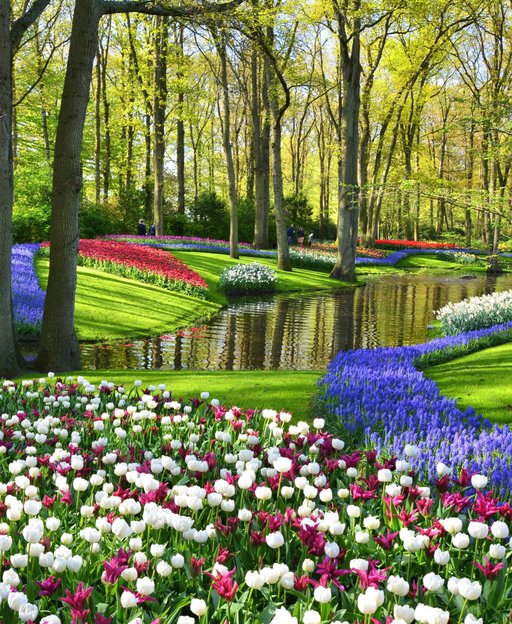
Spring is the Netherlands at its most iconic. Fields of tulips stretch across the bulb-growing region between Leiden and Haarlem, cycling paths run arrow-straight through swathes of colour, and the country shakes off winter in style. This is the busiest season for international visitors, and for good reason.
March: Early Blossoms and Fewer Crowds
Keukenhof opens in late March and the first early-flowering tulips, crocuses and hyacinths burst into bloom. Temperatures sit at around 8–12°C, so pack a jacket, but the light is extraordinary — low and golden, ideal for photography. Visitor numbers build gradually through the month, so the first two weeks of March draw fewer tourists than the Easter weekend.
The city of Leiden, where the first Dutch tulips famously bloomed in the 16th century, makes a wonderful base for exploring the bulb fields. The countryside between Leiden and Haarlem rewards cycling — hire a bicycle in Haarlem and ride the Bollenstreek route through the fields at your own pace.
April: Peak Tulip Season and King’s Day
April is the undisputed highlight of the Dutch calendar. Keukenhof reaches its peak between mid-April and early May, with seven million bulbs in flower across 32 hectares of manicured parkland. Book tickets in advance — queues at the gate grow long, and the online price is lower.
King’s Day (Koningsdag), celebrated on 27 April, transforms every Dutch city into a street party of extraordinary scale. Amsterdam fills with orange-clad revellers, floating stages, markets and live music. Rotterdam and Utrecht celebrate just as enthusiastically. It stands as one of the great European public holidays — spontaneous, inclusive and gloriously chaotic. If you plan to visit on 27 April, lean into it fully.
Average temperatures in April reach around 14°C, and the days lengthen noticeably. April also brings the windmills at Kinderdijk into full working rotation — the combination of wildflower meadows and working mills in early April light makes for exceptional photographs.
May: Warmth, Cycling and Liberation Day
May extends the spring mood with warmer temperatures of 16–18°C and far fewer crowds once Keukenhof closes. Liberation Day on 5 May marks the end of the Second World War occupation, and free concerts take place across the country. Dutch cities feel celebratory but calm — a wonderful contrast to the April rush.
Cycling conditions peak in May. The Netherlands has over 35,000 kilometres of dedicated cycling paths, and May’s dry weather and long evenings make multi-day routes genuinely enjoyable. The LF1 North Sea Route, running from Den Helder south through the dune landscape, passes through some of the most beautiful Dutch coastline during this period.
Summer (June–August): Long Days, Festivals and the Beach
Summer in the Netherlands runs warmer than most visitors expect. Average temperatures in July reach 22–24°C, and the North Sea coast draws Dutch families in their thousands to beaches at Scheveningen, Zandvoort and Texel. The cities are busy, prices climb, and accommodation books out early — but the energy is infectious.
June: Festival Season Begins
June marks the start of outdoor festival season. Pinkpop, one of the oldest rock festivals in the world, takes place in Landgraaf every June. Open-air cinemas appear in Amsterdam’s Vondelpark. The Rotterdam Philharmonic plays evening concerts on the Binnenrotte. The Dutch embrace summer with an enthusiasm that feels thoroughly earned after a grey winter.
The Amsterdam food scene shifts outdoors in June, with terrace dining along the Prinsengracht and food trucks lining the IJ waterfront. Herring stalls serve nieuwe haring — the season’s first raw herring, eaten with raw onion and gherkin — from around mid-June onwards. It costs very little and tastes surprisingly good.
July and August: Beach Season and Busy Cities
These are the hottest months and the most expensive. Amsterdam reaches peak tourist density in July and August. Book hotels three to four months ahead, explore the city early in the morning or after 18:00, and consider basing yourself in Haarlem or Utrecht to escape the crowds while keeping Amsterdam within easy reach.
The coast rewards those who plan ahead. Texel Island, reached by a short ferry from Den Helder, offers wide beaches, seal colonies and cycling paths through national park. The island fills quickly in August, but midweek visits remain surprisingly manageable. Families return year after year, and it is easy to see why once you stand on the vast western beach at low tide with nothing but sky ahead of you.
One underrated summer destination is the Hoge Veluwe National Park in Gelderland. Thousands of white bicycles sit available for free use inside the park, and the forest trails stay cool even on warm days. The Kröller-Müller Museum, deep inside the park, holds one of the world’s great Van Gogh collections — and the walk through the sculpture garden on a summer afternoon feels genuinely extraordinary.
Autumn (September–November): Golden Light and Harvest Charm
September is arguably the best-kept secret in Dutch travel. Temperatures remain comfortable at around 17°C, the summer crowds thin dramatically, and the light turns warm and amber. Canal boats in Amsterdam, windmills at Zaanse Schans, and the architecture of Delft look stunning under September’s golden afternoon light.
September: Warm and Unhurried
Heritage Open Days (Monumentendag) take place in mid-September, opening hundreds of privately owned historic buildings — canal houses, windmill interiors, guildhalls — to the public, free of charge. This single weekend offers access to corners of Dutch history that money cannot otherwise buy. The Alkmaar cheese market runs until the last Friday of October, making September ideal for combining a market visit with autumn cycling along the Noord-Holland countryside.
October and November: Misty Mornings and Quiet Museums
October brings misty canal mornings and the first real chill. Museum queues at the Rijksmuseum and Van Gogh Museum in Amsterdam drop significantly compared to summer — booking a morning slot becomes straightforward rather than essential. The tulip bulb planting season begins in October, and the bulb fields around Lisse transform into neatly tilled rows, beautiful in their own austere way.
November is the quietest month and the least expensive. Rain becomes more frequent, but the Netherlands functions beautifully in wet weather. Brown cafés serve jenever (Dutch gin) and erwtensoep (thick pea soup), and the absence of tourist crowds makes it the ideal time to explore the architecture of Rotterdam or wander the historic centre of Maastricht without sharing the pavement with a tour group.
Winter (December–February): Christmas Markets and Candlelit Cafés
Dutch winters are grey and damp, but the country channels them beautifully. December fills Amsterdam’s canals with the Amsterdam Light Festival — a free outdoor exhibition of illuminated artworks along the waterways, running from late November through January. Christmas markets appear in Utrecht, Leiden, Gouda (where the entire medieval centre goes candlelit on the Thursday before Christmas), and dozens of smaller towns.
December: Light Festival and Sinterklaas
Sinterklaas, the Dutch gift-giving festival, takes place on 5 December — the real high point of the Dutch winter season, celebrated in living rooms and public squares alike. Bookshops, toy stores and patisseries fill with pepernoten and speculaas biscuits from mid-November onwards. The Amsterdam Light Festival transforms evening canal walks into something genuinely special: hire a canal boat to view the installations from the water and allow at least two hours.
January and February: Low Prices and Near-Empty Museums
January and February offer the lowest hotel prices of the year and virtually no queues at major museums. Arrive at the Rijksmuseum on a Tuesday morning in February and you will find the galleries almost to yourself. The Vermeer room at the Mauritshuis in The Hague holds one of the great paintings in European art — Girl with a Pearl Earring — and in winter you can stand in front of it in near-silence.
Ice skating occasionally arrives at Dutch canals in very cold winters, though reliable freezes have grown rare. When it does happen, the country stops entirely to skate — an extraordinary sight, and one that belongs to winter alone.
Best Time to Visit by Interest
Different priorities point to different timing. Here is a practical summary:
- Tulips and flowers: Mid-April to early May, centred on Keukenhof
- Cycling: May and September — dry, mild and manageable wind
- Beaches: July and August at Texel, Zandvoort or Scheveningen
- Museums without queues: November through February
- Christmas markets: Late November through Christmas Eve
- Budget travel: January and February, the lowest hotel prices of the year
- Festivals and nightlife: King’s Day (27 April) and June through August
- Photography: April for tulip fields, September for golden autumn light
What to Pack for Each Season
The Netherlands sits close to the North Sea, and its weather changes quickly regardless of season. Pack a waterproof layer at any time of year. Spring and autumn call for light layers; summers warm up but evenings turn cool. In winter, a proper coat, hat and gloves are essential for canal walks and cycling.
Dutch cities are overwhelmingly navigated on foot and bicycle. Comfortable, sturdy shoes matter more than fashion. Cobblestones appear everywhere, and flat shoes outperform trainers over a long day of walking in Amsterdam or Delft.
You Might Also Enjoy
- Kinderdijk: The Complete Guide to the Netherlands’ Most Iconic Windmills
- Haarlem Day Trip from Amsterdam: The Complete 2026 Guide
- Dutch Food Guide: What to Eat (and Drink) in the Netherlands
Plan Your Netherlands Trip
Ready to start planning? Our Netherlands Start Here guide covers everything from city guides to regional itineraries, helping you build the perfect Dutch trip from scratch.
What is the best time to visit the Netherlands for tulips?
Mid-April to early May is the peak tulip season. Keukenhof gardens, open from late March, reach their best between 15 April and 5 May. Book tickets in advance and aim for a weekday morning to avoid the largest crowds at the park entrance.
Is the Netherlands worth visiting in winter?
Yes — winter offers the lowest prices, nearly empty museums and the Amsterdam Light Festival, which runs from late November through January. December’s Christmas markets and Sinterklaas celebrations give the country a genuinely festive character that the summer crowds never see.
What is the weather like in the Netherlands in September?
September averages around 17°C with relatively low rainfall compared to October and November. Many travellers consider it the best month for combining warm weather with smaller crowds — particularly for museum visits, cycling and canal boat trips through Amsterdam or Leiden.
Is August a good time to visit Amsterdam?
August is the busiest and most expensive month in Amsterdam. Hotels and popular restaurants book out quickly. Visit early in the morning before 10:00, explore quieter neighbourhoods such as De Pijp and Noord, and consider basing yourself in Haarlem or Utrecht with easy day trips into the city centre.
Join Netherlands Lovers
Every week, discover the Netherlands beyond the tourist trail — hidden villages, local recipes, cycling routes, and travel insights you won’t find in any guidebook.
Subscribe free — enter your email:
Love more? Join 64,000 Ireland lovers → · Join 43,000 Scotland lovers → · Join 30,000 Italy lovers →
Free forever · One email per week · Unsubscribe anytime
Tours & experiences you might love


Powered by Viator. Some links are affiliate links — we may earn a small commission at no extra cost to you.