

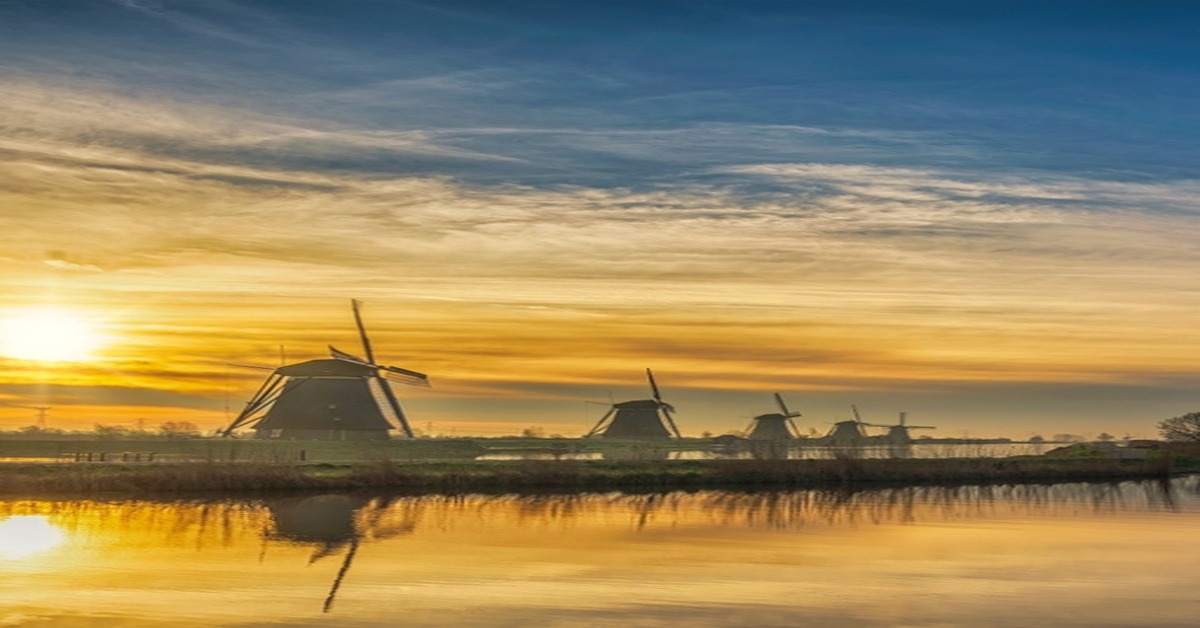
Nineteen windmills rise from the flat Dutch polder at Kinderdijk, their sails turning slowly above a mirror-still canal. Built around 1740 to drain the surrounding land, they operated for nearly three centuries. Today, this UNESCO World Heritage Site draws visitors from across the world, and it earns every superlative: this is the largest concentration of ancient windmills in the Netherlands, and one of the most photogenic landscapes in Europe. Here is everything you need to know before you visit.
Love the Netherlands? Join our free newsletter for hidden Dutch gems → inlovewithnetherlands.com/subscribe
What makes Kinderdijk special?
The Netherlands has roughly 1,200 surviving windmills, but nowhere else in the country do they gather in such dramatic numbers. At Kinderdijk, 19 mills stand in two parallel rows along a polder canal in the Alblasserwaard, south-east of Rotterdam. The name carries a piece of Dutch legend: kinderdijk means “children’s dyke,” and it reportedly refers to a wooden cradle found drifting against the dyke after the catastrophic St Elizabeth’s flood of 1421, with a cat — and a sleeping baby — miraculously aboard.
The windmills pumped water out of the low-lying polder for more than 200 years, keeping the land dry enough for farming. UNESCO added Kinderdijk to its World Heritage list in 1997, recognising the site as an outstanding example of Dutch ingenuity in managing water. The polders here sit roughly two metres below sea level — a fact that makes the engineering achievement all the more remarkable.
Getting to Kinderdijk from Rotterdam
Rotterdam serves as the natural base for a Kinderdijk visit, and the city offers two enjoyable ways to make the journey.
By Waterbus ferry: The Waterbus (line 20) departs from the Erasmusbrug quay in Rotterdam city centre and connects to Kinderdijk in around 45 minutes, with a transfer at Ridderkerk. A single ticket costs from around €4 per person each way using the OV-chipkaart; check current fares at waterbus.nl. The journey along the Nieuwe Maas river is scenic in its own right, gliding past working port infrastructure and flat green polderland.
By bicycle: Cycling to Kinderdijk from Rotterdam takes roughly an hour along well-signposted cycle paths — around 15 kilometres. The Netherlands’ cycling infrastructure is exceptional, and the flat terrain makes this an easy ride. Hire a bike from a rental shop near Rotterdam Centraal station and follow the national cycle route signs. The approach through the polders on two wheels is unforgettable. For more on what Rotterdam offers when you arrive back, read our Rotterdam city guide.
Getting to Kinderdijk from Amsterdam
Direct trains run from Amsterdam Centraal to Rotterdam Centraal in around 40 minutes. From Rotterdam, take the Waterbus as described above. Total travel time from Amsterdam to Kinderdijk runs to about 1 hour 45 minutes each way. In summer, organised coach tours also operate from Amsterdam, though travelling independently gives you greater flexibility over your timing.
Driving from Amsterdam takes around 1 hour 15 minutes via the A4 motorway. A car park operates near the visitor entrance, though spaces fill quickly on busy weekends in July and August.
Tickets and opening hours
Kinderdijk opens daily throughout the year, with extended hours in summer. Expect opening times of 9 am to 5:30 pm in spring and autumn, and later closing times during the peak summer months. Adult admission runs to approximately €19.50 in 2026; children aged 4 to 12 pay roughly half that. Always check the current prices and book in advance at the official Kinderdijk website before your visit. Pre-booked tickets move you through the entrance faster, which matters in high summer when queues form by mid-morning.
Visitors with limited mobility should note that the polder paths include some uneven surfaces, though a good stretch of the main canal route allows wheelchair access.
What to see and do at Kinderdijk
The main attraction at Kinderdijk is simply being among the windmills — walking the 2.5-kilometre polder path that runs between the two rows of mills, watching their sails turn, and letting the flat, reedy landscape work its quiet magic. But there is more to do than simply stroll.
Enter a windmill: Several of the mills open their interiors to visitors. Climbing inside reveals the clever wooden gear systems that transferred wind power into the pumping mechanism. The miller’s living quarters in one restored mill are particularly fascinating — families genuinely lived here, in tiny rooms built within the mill’s circular base.
Take a boat tour: In the summer months, a small ferryboat operates along the canal between the windmills, giving you a water-level perspective on the entire site. This is the best way to understand how the mills sat at the intersection of drainage canals, pumping water upward into the river.
Visit the Wisboom visitor centre: The centre offers a well-designed exhibition on Dutch water management history — essential context for understanding why these 19 windmills represent a landmark in human ingenuity rather than just a pretty scene.
Hire a bicycle on site: If you did not cycle from Rotterdam, hire a bike at Kinderdijk and explore the wider polder network at your own pace. The cycling routes extend well beyond the main site, threading through farmland and alongside canals that see very few tourists.
Kinderdijk Windmill Days in September
On select evenings in September, Kinderdijk holds its annual Windmill Days event, when all 19 mills operate simultaneously and illuminations light the site at dusk. This is a deservedly popular event and tickets sell out weeks in advance. If your Netherlands trip falls in September, book as early as possible and check the exact dates at kinderdijk.nl.
Best time to visit Kinderdijk
Kinderdijk rewards visits in every season, but each time of year offers a different experience:
- Spring (April–May): Fewer crowds, cool clear light, and green shoots emerging across the polders. Photographers tend to prefer this season, especially in early morning when mist sits on the canals.
- Summer (June–August): The longest opening hours and the liveliest atmosphere, but also the most visitors. Arriving before 10 am or after 3 pm keeps you ahead of the busiest periods.
- September: Autumn light arrives early, and the Windmill Days event makes September the most rewarding month of the year if you can secure tickets.
- Winter: Kinderdijk on a clear winter day — frost on the banks, low pale light, barely another soul around — produces a stillness that summer simply cannot match. Opening hours reduce in winter, so check before you go.
Kinderdijk compared to Zaanse Schans
Many visitors wonder whether to choose Kinderdijk or Zaanse Schans for their Dutch windmill experience. The two sites offer very different atmospheres. Zaanse Schans, just 15 minutes from Amsterdam by train, functions as a re-created windmill village with craft shops, a clog maker, and a cheese farm — an easy half-day excursion that requires no advance planning. Kinderdijk, by contrast, sits in a genuinely rural landscape with almost no commercial development, which makes it feel far more authentic. The 19 windmills at Kinderdijk also dwarf the handful at Zaanse Schans in terms of sheer visual impact. If you are pressed for time, Zaanse Schans is more convenient. If you want the real thing, Kinderdijk wins.
For an entirely different face of the Dutch waterscape, Giethoorn offers a village of canals and no roads — equally extraordinary, equally Dutch.
Practical tips for your visit
- Book tickets online before arrival, especially between June and September.
- Wear comfortable walking shoes — the polder paths are firm but uneven in places.
- Bring a picnic if you visit in peak season; the on-site café fills quickly.
- Morning light falls across the windmills from the east — ideal for photography in spring and autumn.
- Combine your visit with a half-day in Rotterdam for an excellent full day out; the Rotterdam guide covers the highlights.
- Our Netherlands trip planning hub covers the best day trips, routes, and combinations across the country.
You might also enjoy
- Rotterdam, Netherlands: Your Complete City Guide for 2026
- Giethoorn Day Trip from Amsterdam: The Complete Guide
- Zaanse Schans: Windmills Near Amsterdam
Plan your Netherlands trip
Ready to explore more of the Netherlands? Our Start Here guide brings together the best day trips, cities, and hidden corners of the country to help you plan an unforgettable visit.
How far is Kinderdijk from Amsterdam?
Kinderdijk sits approximately 80 kilometres south of Amsterdam. The journey takes around 1 hour 45 minutes by public transport — train to Rotterdam Centraal, then Waterbus ferry — or about 1 hour 15 minutes by car via the A4 motorway.
Do you need to book Kinderdijk tickets in advance?
Pre-booking is strongly recommended between June and August, when the site receives thousands of visitors daily. Tickets are available on the official Kinderdijk website and let you skip the entrance queues. Outside peak season, tickets are generally available on the day.
What is the best way to get to Kinderdijk from Rotterdam?
The Waterbus ferry from Rotterdam Erasmusbrug provides a scenic 45-minute journey and drops you close to the Kinderdijk entrance. Cycling from Rotterdam — around 15 kilometres along dedicated cycle paths — is the most rewarding option if the weather allows.
Join Netherlands Lovers
Every week, discover the Netherlands beyond the tourist trail — hidden villages, local recipes, cycling routes, and travel insights you won’t find in any guidebook.
Subscribe free — enter your email:
Love more? Join 64,000 Ireland lovers → · Join 43,000 Scotland lovers → · Join 30,000 Italy lovers →
Free forever · One email per week · Unsubscribe anytime
Tours & experiences you might love


Powered by Viator. Some links are affiliate links — we may earn a small commission at no extra cost to you.