

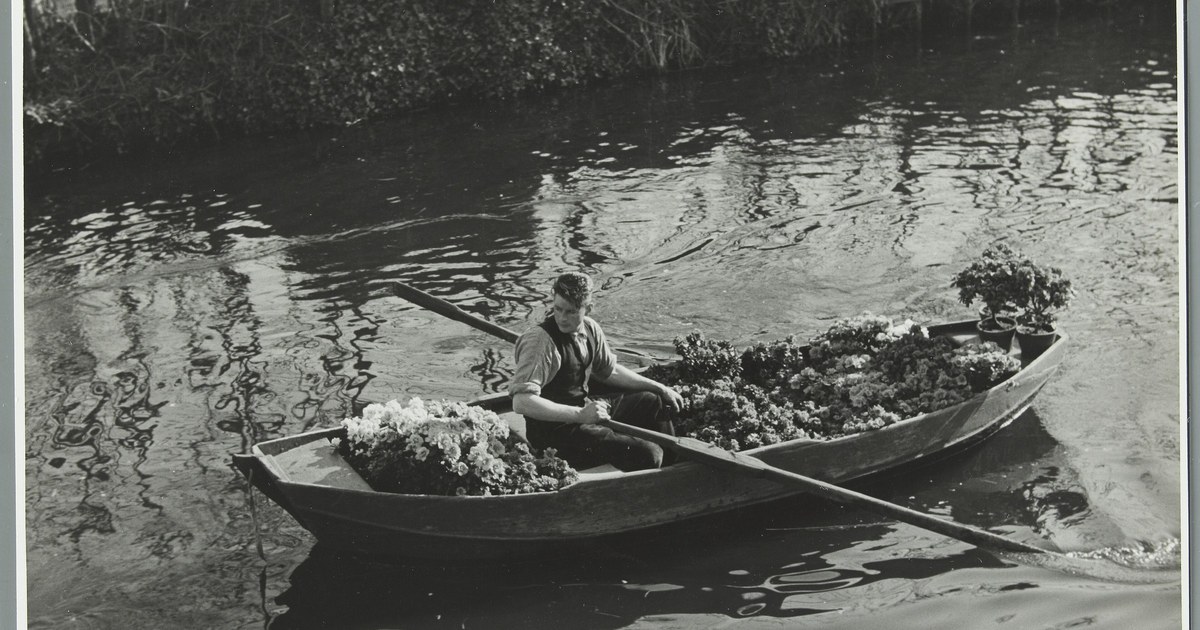
Every morning before most people wake up, 20 million flowers change hands in a single building south of Amsterdam. Buyers sit in tiered auction rooms. Clocks tick down. Prices fall — not rise — and the first bidder to press a button wins. By the time you pour your morning coffee, those roses may already be loaded onto a plane to Tokyo.
This is Aalsmeer. And it is unlike anywhere else on earth.
Free Netherlands Travel Guide
The Ultimate Netherlands Travel Guide (PDF), 2026 edition. All 12 provinces in one place. Free when you join our newsletter.
A Building Big Enough to Hide Three City Centres
The Royal FloraHolland auction complex at Aalsmeer is the largest commercial building in the world by floor space. It covers more than 518,000 square metres — roughly four times the size of Monaco. Trains of trolleys carrying flowers glide along internal railway tracks. Workers move between rows in electric carts.
The numbers are staggering. On a peak spring day, the auction handles 40 million individual flowers and plants. The complex connects directly to Schiphol Airport, just 10 kilometres away. From field to flight, the whole chain moves in under 24 hours.
Nothing else in the global flower trade comes close to this scale.
How the Dutch Auction Works
The Dutch auction runs backwards. That surprises most first-time visitors.
In a conventional auction, prices start low and climb. In a Dutch auction, the price starts high and falls. The moment a buyer presses a button, they lock in the price and the lot is theirs.
The auction clock — a large circular dial at the front of each room — ticks down quickly. Buyers sit in raked seating, hands hovering near their consoles. Speed matters. Hesitate for one second and you lose the lot to a competitor, or the price falls so low it barely covers the grower’s costs.
Dutch flower traders invented this method centuries ago in Amsterdam’s markets. Today it drives 6 billion stems a year through Aalsmeer alone.
From Dutch Fields to Your Florist
Enjoying this? Get stories like this every week from Love Netherlands — Subscribe free →
The Netherlands grows roughly 52 per cent of all cut flowers traded globally. Most of that production flows through Aalsmeer and a handful of other FloraHolland auction sites.
A rose cut in a Westland greenhouse before midnight arrives at Aalsmeer in the early hours. It sells at auction around 6am. By mid-morning, it moves into a temperature-controlled distribution truck. By evening, it may sit in a florist’s bucket in Paris, London, or Sydney.
Growers come from beyond the Netherlands too. Kenyan roses, Colombian carnations, and Ethiopian lilies all flow through Aalsmeer. The Dutch don’t always grow these flowers — they simply auction them better than anyone else.
If you want to understand the Dutch relationship with flowers, cycling the tulip fields of the Bollenstreek shows you where many of those stems begin their journey. The auction at Aalsmeer is where they reach the world.
What You See on a Visitor Tour
Visitors can tour the auction floor on a raised walkway that runs directly over the live trading area. The tour starts at 7am on weekdays. You watch the trolleys, the carts, the auction rooms, and the clock in real time.
The auction rooms are the highlight. Rows of buyers in full concentration. The clock spinning down. A decisive click. Then another lot enters the room.
Guides explain the logistics — the trolley rail system, barcode tracking, cold-chain storage. None of it is glamorous. All of it is extraordinary.
For more on the Netherlands’ flower culture, the Keukenhof guide covers the best time to see the fields in bloom — a perfect half-day trip from Aalsmeer.
Arriving at the Right Time
The best time to visit is February through May. Dutch-grown tulips, hyacinths, and roses peak in those months. The trading floors are at their most intense. The flower colours, stacked in thousands of barrows, are extraordinary.
The auction closes by around 11am. If you arrive after that, the trading floors go quiet and the experience changes completely. An early start makes all the difference.
New to the Netherlands and not sure where to begin? The Love Netherlands start here guide covers the essentials for first-time visitors.
When is the Aalsmeer flower auction open to visitors?
The visitor gallery is open Monday to Friday from 7am to 11am. The busiest trading period runs between 7am and 9am — arrive early if you want to see the auction at full intensity.
Where is the Aalsmeer flower auction?
The Royal FloraHolland auction is at Legmeerdijk 313, 1431 GB Aalsmeer. It sits about 10 kilometres from Schiphol Airport and takes around 45 minutes by bus from Amsterdam Centraal.
Can I buy flowers directly at Aalsmeer?
The auction floor is reserved for registered buyers — wholesalers, florists, and exporters. Visitors watch the trading from a gallery walkway above but cannot bid directly. A small on-site shop sometimes sells surplus flowers to the public.
What is the best time of year to visit the Aalsmeer flower auction?
February through May is peak season, when Dutch tulips, hyacinths, and roses are in full production. Visit in March or April for the largest variety and the most impressive displays on the auction floor.
There is something quietly moving about watching 20 million flowers pass through a single building on a weekday morning. Each stem was planted, tended, cut, and packed by someone, somewhere. Aalsmeer is where it all comes together — and then scatters, in every direction, to every corner of the world.
The Dutch have always known how to move things. Flowers are just the most beautiful cargo.
Love Netherlands — Free Every Week
Canal towns, hidden villages, Dutch stories. A free letter about the Netherlands — written slowly, delivered weekly.
Free forever · One email per week · Unsubscribe anytime
Free Netherlands Travel Guide
The Ultimate Netherlands Travel Guide (PDF), 2026 edition. All 12 provinces in one place. Free when you join our newsletter.
Tours & experiences you might love


Powered by Viator. Some links are affiliate links — we may earn a small commission at no extra cost to you.