

Keukenhof Gardens is one of the most spectacular sights in Europe — seven million flowers blooming across 32 hectares of parkland in the Dutch bulb-growing district of Lisse. This Keukenhof Gardens guide covers everything you need to plan your visit: when to go, how to get there, what to see, and the practical details that will make the difference between a rushed morning and a day you genuinely remember.
Love the Netherlands? Join our free newsletter for hidden Dutch gems → inlovewithnetherlands.com/subscribe
What Is Keukenhof?
Keukenhof Gardens sits in the village of Lisse, in the South Holland province, right in the heart of the Bollenstreek — the strip of Dutch bulb-growing land that stretches from Haarlem to Leiden. The gardens open each year for a brief window in spring, typically from late March through mid-May, and during that time they attract visitors from across the world who come to see the tulips, daffodils, hyacinths, and hundreds of other bulb varieties in full bloom.
The estate dates back to the fifteenth century, when it served as the kitchen garden for a countess’s castle. The name Keukenhof — which translates roughly as “kitchen courtyard” — reflects those origins. Today it is run as a non-profit showcase for the Dutch flower industry, with bulb growers and florists contributing displays each season. Every year has a different theme, and the pavilion exhibitions change to match.
What makes Keukenhof different from simply seeing tulip fields in the Dutch countryside is the density and variety on display. Alongside the famous tulips, you will find ornamental lakes, a working windmill, themed flower pavilions, sculpture gardens, and woodland walks. It is designed to be strolled at leisure, not rushed.
When to Visit Keukenhof Gardens
Timing your Keukenhof Gardens visit is the single most important decision you will make. The gardens are only open for roughly eight weeks each year. Peak blooming shifts by a week or two depending on the winter, but in most years, the windows below hold fairly reliably.
Late March: Early Season
The gardens open in late March and during the first couple of weeks you will find daffodils, hyacinths, and early tulip varieties in full colour. The tulip fields surrounding Lisse are just beginning to show their first rows of colour. Crowds at this point are lighter than in April, and there is genuine satisfaction in seeing the gardens before the main season rush. The weather can be unpredictable — cold, occasionally wet — but the light on a clear day is exceptional for photography.
April: Peak Season
April is peak season at Keukenhof, and the second and third weeks of the month are generally considered the height of the tulip display. This is when the gardens are at their most colourful, the pavilions are fully stocked, and the surrounding bulb fields are a solid patchwork of reds, yellows, pinks, and purples stretching to the horizon. It is also the busiest period. Weekends in April, particularly around the Easter holidays, can be extremely crowded. If you are visiting in April, a weekday morning visit starting as early as possible will give you the best experience.
May: Late Season
By early May, the tulips are fading but the gardens shift into a different kind of beauty — alliums, late-flowering varieties, and the pavilion displays continue until the gardens close, usually around mid-May. Visitor numbers drop noticeably compared to April, and if you do not mind missing peak tulip colour, this can be a very pleasant time to visit. The surrounding bulb fields are being harvested in May, which means the flower heads are removed — something worth knowing if you plan to cycle the region.
How to Get to Keukenhof from Amsterdam
Keukenhof is roughly 35 kilometres from Amsterdam, and there are several ways to reach it. The gardens have no dedicated train station, so you will need to combine transport options.
By Bus (the easiest option)
During the Keukenhof season, Connexxion operates a direct express bus service (Bus 858) from Amsterdam Schiphol Airport to Keukenhof. Schiphol is directly connected to Amsterdam Centraal by frequent trains, so the journey from central Amsterdam via Schiphol to the gardens takes around an hour in total. Combined bus and entry tickets can be purchased in advance, which saves time at the gate. The bus runs frequently during the day, with departures roughly every 30 minutes. This is the most straightforward option for most visitors.
By Car
Driving to Keukenhof takes around 40 minutes from Amsterdam without traffic, but parking in April can mean a significant wait. There are large car parks adjacent to the gardens, but on busy weekends in peak season, queues for parking form well before the gates open. If you drive, aim to arrive at opening time (09:00) or book your entry ticket in advance to avoid bottlenecks.
By Bicycle
One of the most enjoyable ways to reach Keukenhof is by cycling through the bulb fields themselves. Bike hire is available in nearby Lisse and in Haarlem, and marked cycling routes through the Bollenstreek pass directly through the tulip-growing areas. In peak tulip season, this turns the journey to the gardens into an attraction in its own right. The full cycling loop from Haarlem to Keukenhof and back takes a half-day at an easy pace and passes some of the most photogenic stretches of fields in the region.
Tickets and Practical Information
Keukenhof does not sell tickets at the gate — or rather, it strongly discourages it. Pre-booking online is standard practise, and in April it is effectively essential. Tickets are time-slot based, which helps manage crowd flow at the entrance. Booking a morning slot (09:00 to 10:00) will give you the best experience: the crowds build through the day, and by early afternoon the main paths can become very busy.
The gardens are open from 09:00 to 18:00 daily during the season. The last entry is an hour before closing. Dogs are not permitted inside.
Inside the park there are several restaurants and snack stands. Prices are in line with tourist attraction standards — high by Dutch everyday norms. Bringing your own lunch and eating on one of the many benches scattered through the gardens is a perfectly common and pleasant alternative.
What to See Inside Keukenhof Gardens
The gardens are large enough that you could walk through them without a plan and still have an enjoyable experience, but knowing what to prioritise makes a difference, especially on a busy day.
The Themed Gardens
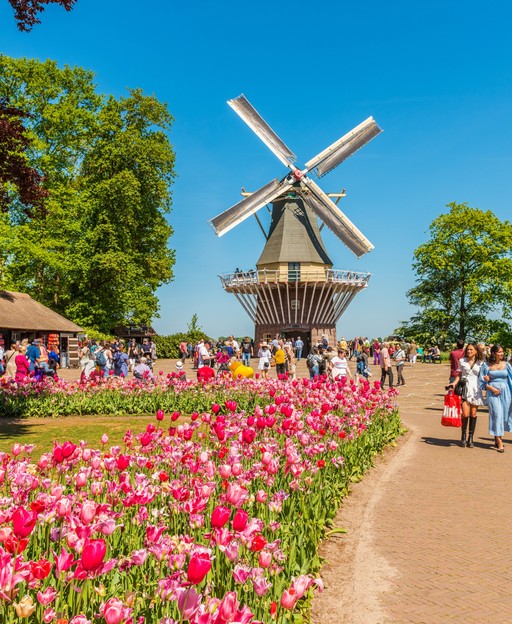
The main garden areas each have a distinct character. The formal Dutch garden near the entrance features symmetrical beds of tulips and hyacinths arranged in geometric patterns — this is the classic Keukenhof image. Further in, the woodland garden offers a quieter atmosphere with naturalised bulbs planted beneath the trees, including fritillaries and species tulips that you rarely see in formal garden displays. The Japanese garden and the English landscape garden each offer a different mood, and the rose garden is beautiful later in the season.
The Pavilions
Keukenhof’s indoor pavilions house the cut flower and potted plant displays, and on a rainy day they become a genuine refuge. The Beatrix pavilion is the largest and usually contains the most elaborate themed display, built fresh each year by Dutch growers and florists. The pavilions are also where you will find demonstration areas, live music on some days, and — if you want to take a piece of Keukenhof home — official bulb sales. Buying bulbs direct from the growers at Keukenhof is one of the better sources if you want reliable quality for planting in your home country.
The Windmill and the Lake
The working windmill at the edge of the park overlooks the Keukenhof lake and the surrounding bulb fields. The lake is one of the gardens’ most photographed spots, especially in April when tulips border its edges and rowing boats drift across the water. On a clear day the windmill and the flower beds together deliver an image that feels almost unrealistically Dutch — which is to say, it really does look like that.
How Much Time Do You Need?
Most visitors spend between two and four hours at Keukenhof. Two hours is enough to see the main highlights without rushing. Three to four hours allows you to take the quieter paths, sit by the lake, visit all the pavilions, and have lunch inside the park. If you are combining Keukenhof with a cycle through the bulb fields or a visit to Leiden (less than 20 minutes away by car), plan for a morning at the gardens and an afternoon in town.
Practical Tips for Your Visit
A few things that make a real difference on the day:
- Wear comfortable shoes. The paths are mostly flat and well-surfaced, but you will cover several kilometres on an unhurried visit.
- Bring a layer. April in the Netherlands can deliver warm sunshine or sharp cold in the same morning. The open areas of the garden are exposed to wind.
- Go early. The difference between arriving at 09:00 and arriving at 11:30 on a busy April day is significant. The first hour is measurably quieter and the light is better for photography.
- Pick a weekday if you can. Weekend crowds in peak season are noticeably heavier than weekday crowds, particularly around Easter.
- Download the app or grab a paper map at the entrance. The grounds are large enough that the map is genuinely useful for navigating between named gardens and pavilions.
What to Do Near Keukenhof
Keukenhof sits at a convenient point for exploring several other Dutch destinations. Day trips from Amsterdam that combine Keukenhof with a nearby town are very manageable. Leiden is the closest city — a university town with beautiful canals and good museums. Haarlem is 20 minutes north and has a compact, walkable centre with excellent cafes and the Frans Hals Museum. Both work well as afternoon additions to a morning at the gardens.
The cycling routes through the Bollenstreek are worth mentioning again here. Even if you arrive at Keukenhof by bus, hiring a bike in Lisse for an hour or two after your visit to ride through the nearby fields is a simple way to extend the day and see a side of the tulip region that stays hidden from visitors who arrive and leave by coach.
Frequently Asked Questions
When is the best time to visit Keukenhof Gardens?
The second and third weeks of April are generally the peak blooming period, when tulips, hyacinths, and daffodils are all in flower simultaneously. For lighter crowds and a similar display, the last week of March and the first week of May are both worthwhile alternatives.
Do I need to book Keukenhof tickets in advance?
Yes, and it is strongly recommended. Keukenhof operates a timed-entry system, and tickets sell out on peak April weekends. Booking online before you travel secures your slot, usually saves a small amount on the entry price, and means you can walk straight to the entrance without queuing at the ticket window.
How long does it take to see Keukenhof Gardens?
Most visitors are comfortable allowing two to three hours. Spending the full morning — arriving at opening and staying until noon — gives you time to see all the main areas, visit the pavilions, and have a quiet coffee break without feeling rushed. Arriving later in the day means more crowds on the main paths.
Can I visit Keukenhof without a car?
Absolutely. The easiest car-free route is the Bus 858 express from Schiphol Airport, which connects directly to the garden entrance. Schiphol is a 20-minute train ride from Amsterdam Centraal, making the total journey around an hour from central Amsterdam. Combined bus and admission tickets are available online and are the simplest option for visitors staying in Amsterdam.
You Might Also Enjoy
Looking for more Netherlands travel inspiration?
- How to Experience the Dutch Tulip Fields Before the Season Ends — cycling routes, best viewpoints, and timing tips for the Bollenstreek
- Haarlem Travel Guide — the charming city just 20 minutes from Keukenhof, with canals, a covered market hall, and the Frans Hals Museum
- Day Trips from Amsterdam — the best places to visit beyond the city, from windmills to cheese markets
Plan Your Netherlands Trip
Not sure where to start with your Netherlands trip? Our Start Here page brings together the essential guides for planning your visit — from choosing the right time of year to deciding which cities and regions to include in your itinerary.
Join Netherlands Lovers
Every week, discover the Netherlands beyond the tourist trail — hidden villages, local recipes, cycling routes, and travel insights you won’t find in any guidebook.
Subscribe free — enter your email:
Love more? Join 64,000 Ireland lovers → · Join 43,000 Scotland lovers → · Join 30,000 Italy lovers →
Free forever · One email per week · Unsubscribe anytime
Tours & experiences you might love


Powered by Viator. Some links are affiliate links — we may earn a small commission at no extra cost to you.